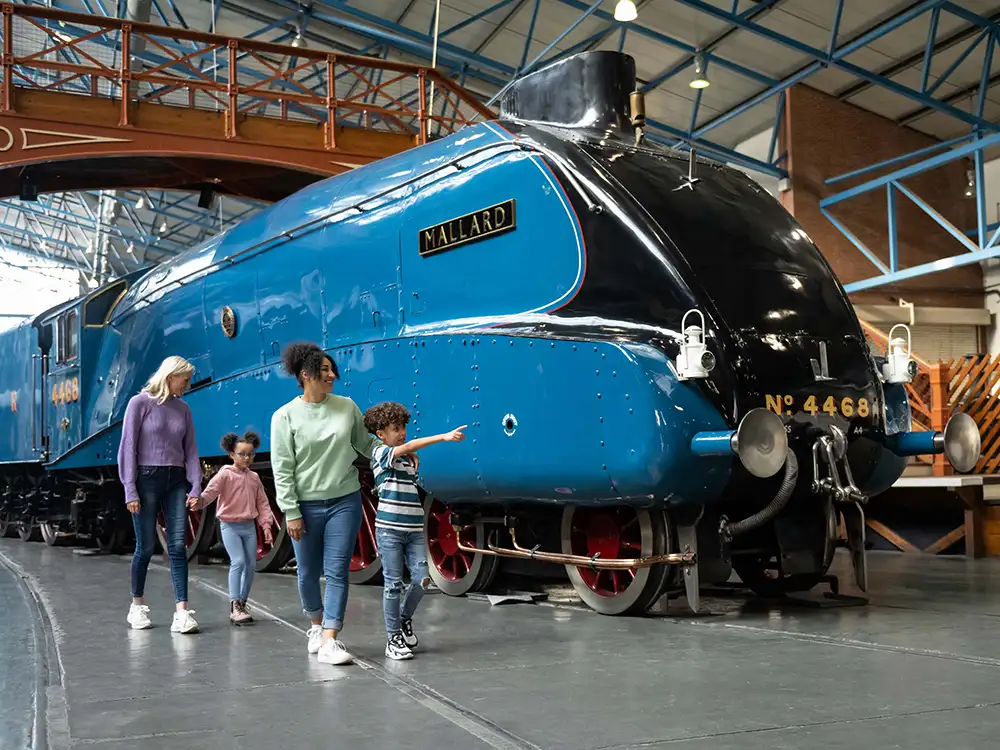

A new digital project from the National Railway Museum in York is bringing a global audience ‘beyond the tracks’.
As part of the celebrations for the 200-year anniversary of the modern railway, the National Railway Museum and Google Arts & Culture have launched the collaborate project ‘Beyond the Tracks’.
Taking an entire year to create, it aims to bring the transformative story of the railways to a global digital audience.
As part of the collaboration, the National Railway Museum is one of the first partners to use the new AI-powered Metadata Enhancement Service from Google Arts & Culture.
The service’s Optical Character Recognition (OCR) capabilities helped transcribe text from handwritten documents and historic artefacts, making the collection more searchable.
This tool is part of a broader effort to help cultural institutions thrive in the digital age, supporting researchers and curators in providing rich information for their collections online. The National Railway Museum joins just three other York attractions with a presence on the Google Arts & Culture platform.
The bespoke content developed for the project includes an overview of the history of the railways and sharing untold stories that go far beyond the iconic engines on display at the National Railway Museum in York to reveal the human and societal revolution the railway ignited.
Amongst the 1,000 artefacts digitised are highlight objects like the Rastrick Notebook, which offers a firsthand account of the world-changing 1829 Rainhill Trials as well as images of Puffing Billy, the world’s oldest preserved locomotive, and a model carriage crafted from the wood of the sunken paddle steamer PS Princess Alice, revealing a fascinating, morbid Victorian secret.
For the first time, virtual 360-degree tours inside the National Railway Museum’s sister site Locomotion in Shildon have been created, showcasing some of the highlights of Europe’s largest undercover collection of historic railway vehicles.
The two new virtual tours take you through the immense Main Hall, appreciating heritage rail vehicles at their true, colossal scale, and New Hall, designed as a traditional engine shed and housing more of the collection’s significant passenger and freight rail vehicles.
You can even trace history itself by walking the historic Brusselton Incline, part of the world’s first public railway from 1825.
Craig Bentley, director, National Railway Museum said ,“Through this digital project, the National Railway Museum is making its unparalleled national collection accessible to all.
“Beyond the Tracks is an expansion of the museum experience, bringing to life the transformative story of the railway in this special bicentenary year.”
Beyond the Tracks is now available for your exploration on Google Arts & Culture at National Railway Museum — Google Arts & Culture.