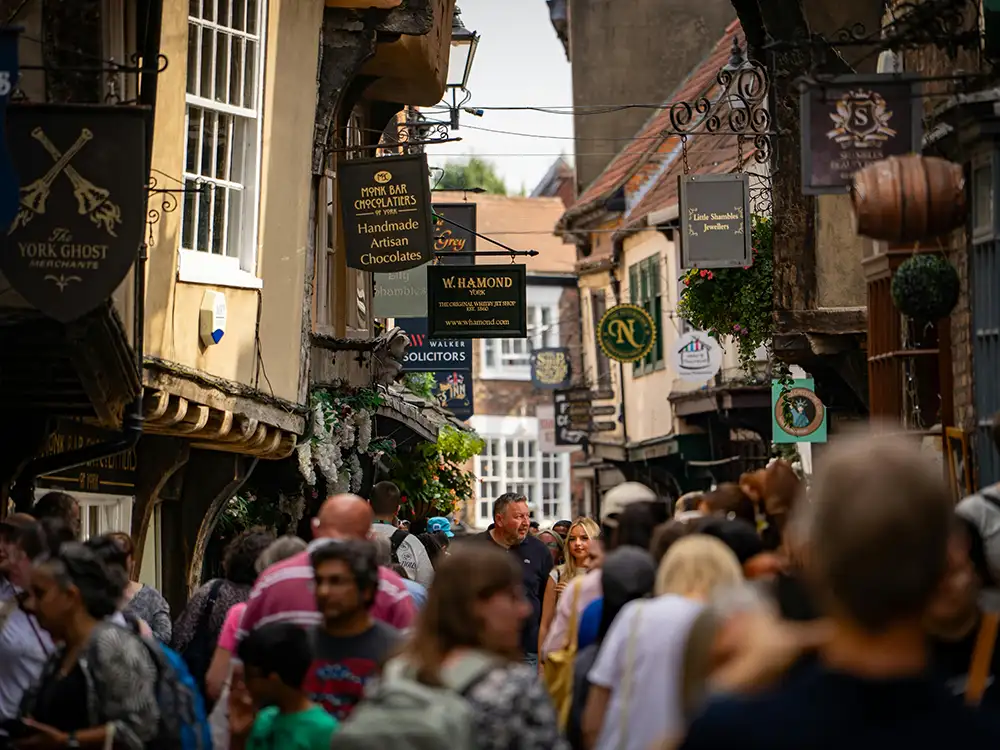

York has long drawn visitors with its medieval streets, Viking heritage, and iconic Minster. But something has changed in recent years.
The city’s events calendar is no longer built around a handful of seasonal peaks, it’s becoming a genuine year-round proposition, and the numbers are starting to reflect that.
Last year, York welcomed 9.4 million visitors, a 5% increase from 2023, with tourism contributing over £2 billion to the local economy. That kind of growth doesn’t happen by accident. It reflects deliberate investment in spreading events across every season, giving both locals and visitors more reasons to engage with the city throughout the year.
York’s Calendar Is No Longer Seasonal
For a long time, York operated at a familiar pace: summer tourists, the Christmas market, and a quiet stretch in between. That pattern has changed considerably. The city now hosts a diverse spread of festivals across every quarter, from the York Literature Festival in March to the York Beer Festival in autumn, and the JORVIK Viking Festival drawing crowds in the colder months.
This diversification has been intentional. Organisers and local bodies have worked to ensure that no single period dominates the cultural agenda, making York a destination worth visiting in February just as much as August.
How York Locals Spend Between Festivals
While major events drive the big spikes, there’s also an interesting question about how York residents fill the quieter stretches. Entertainment spending accounts for 11% of the tourism economy, suggesting a broad appetite for leisure activity that extends beyond ticketed events.
Some of that appetite is being met digitally. Online entertainment, including streaming, gaming, and casino platforms, tends to see increased engagement during event lulls. Those looking at the online leisure space, for instance, can find insights from Gambling Insider on how slot site options have grown to meet demand from UK audiences between live entertainment commitments. These sites tend to have a much bigger variety when it comes to themes, jackpot slots, and features such as payment options. It’s one small part of a broader shift in how people manage their leisure time around an unpredictable events calendar.
Smaller Events Filling the Quiet Months
One of the more striking developments has been the growth of mid-tier events that once might have struggled to find an audience. The York Festival of Ideas is a prime example. In 2024, it delivered 251 events to 58,311 attendees, a 51% increase from the previous year, partnering with 178 organisations and drawing visitors who combined the festival with wider sightseeing.
These aren’t just cultural footnotes. Events like these fill gaps that would otherwise see footfall drop sharply, sustaining the hospitality and retail sectors that depend on consistent visitor numbers. The winter season on Micklegate and Parliament Street alone recorded over 63,770 in footfall, a clear sign that quieter months are no longer being written off.
What This Means for York’s Identity
York is increasingly positioning itself not as a city with a great few months, but as a city worth experiencing in any season. According to Make It York, tourism contributed £2.01 billion to York’s economy in 2024, with day visitor numbers rising by 6% year-on-year, a strong signal that people are finding reasons to visit beyond the traditional peaks.
For residents, this carries its own significance. A more active year-round calendar means more community events, more local economic activity, and a city that feels vibrant regardless of the season. York’s identity has always been tied to its history, but its future looks increasingly like one defined by how well it keeps people engaged, month after month, across every kind of audience.