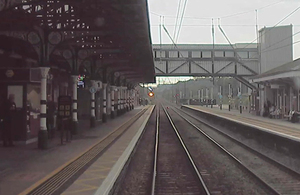

An investigation is underway to find out why an LNER trains travelling from York to London passed over a set of points at twice the permitted speed.
This caused the train to lurch sideways and passengers on board reported that they received minor injuries.
The Rail Accident Investigation Branch (RAIB) says: “Later, follow-up enquiries led to the seriousness of the event being understood.”
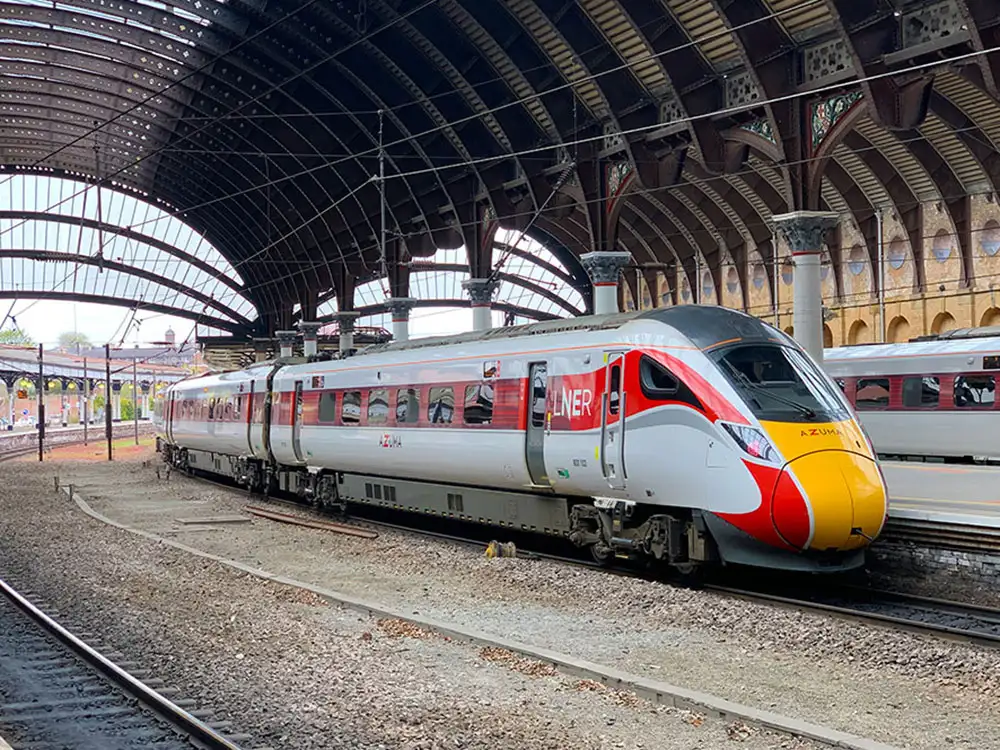
At around 09:20 on 26 September 2025, train number 1Y80, the Middlesbrough to London Kings Cross service, operated by London North Eastern Railway (LNER), was involved in an overspeeding incident at Grantham South Junction.
The service had left Teesside at 07:08 then called at York and set off on a non-stop journey to King’s Cross.
At Grantham the train was routed over diverging points with a permanent speed restriction of 25 mph (40 km/h).
The associated signals displayed the expected indications; however, the train traversed the points at 56 mph (90 km/h). The permissible speed in this area for a train which remains on the main line is 115 mph (184 km/h).
This caused the train to lurch sideways and passengers on board reported to LNER through social media that they received minor injuries.
The RAIB says it has undertaken a preliminary examination and reviewed a similar incident at this location.
It’s also looked at previous investigations into similar overspeeding events that occurred at Spital Junction, Peterborough on 17 April 2022 involving a Lumo service that did not stop at York and 4 May 2023 involving Grand Central, that did.
As the previous investigations still have open recommendations, RAIB has decided to publish a safety digest for this incident. That will be made available on their website in the next few weeks.
After the other incidents, which also involved passengers being thrown around the carriage as the train moved sideways, the RAIB made the following recommendations.
The first recommendation was for Lumo to review its processes to ensure that it effectively controls the risk of overspeeding at diverging junctions.
The second recommendation asked Network Rail to identify junctions where there is a greater potential for overspeeding to occur and to work with operators to share information on the associated risks.
The third recommendation asked Network Rail and train operators to consider and implement risk control measures at those junctions identified in the second recommendation.
The fourth recommendation was intended to ensure that Lumo minimises the risks from falling luggage on its services.
RAIB has also identified two learning points. These relate to the need for drivers to maintain alertness when approaching junction signals and that train operator emergency plans should specifically include processes to deal with the aftermath of overspeeding incidents.
Grand Central was told to review its training and competence management processes to provide its drivers with the necessary non-technical skills or additional strategies to manage the risk encountered at signals which may show different aspects (red, green or yellow lights) to those usually encountered.