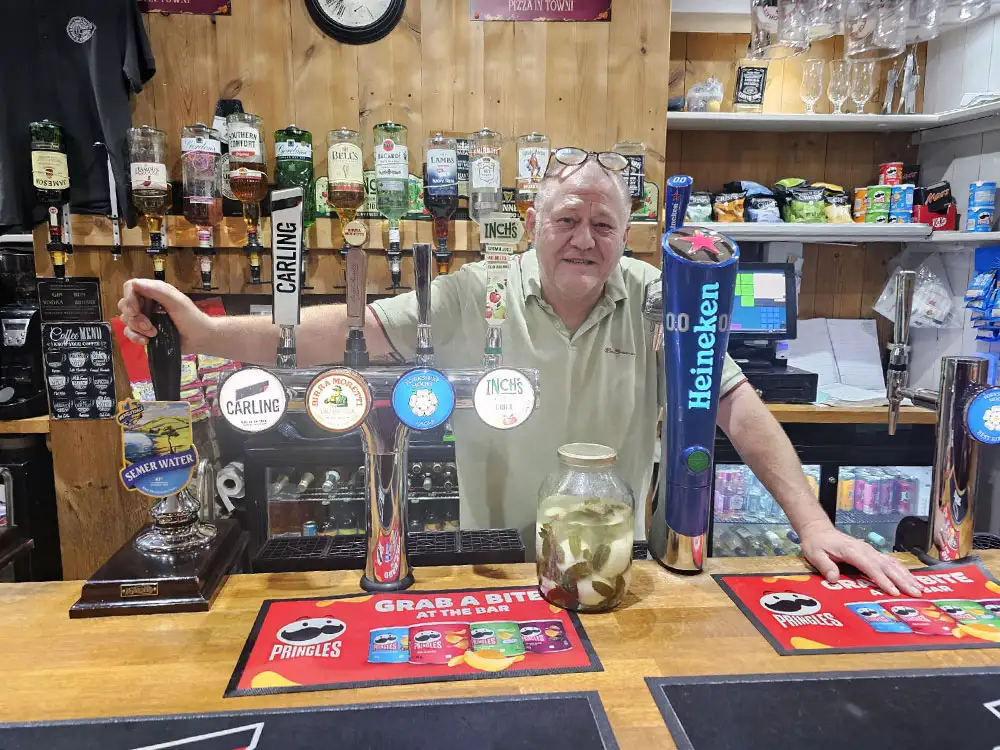

A North Yorkshire pub landlord has called on the Government to put hospitality on “an equal footing” after handing in his notice.
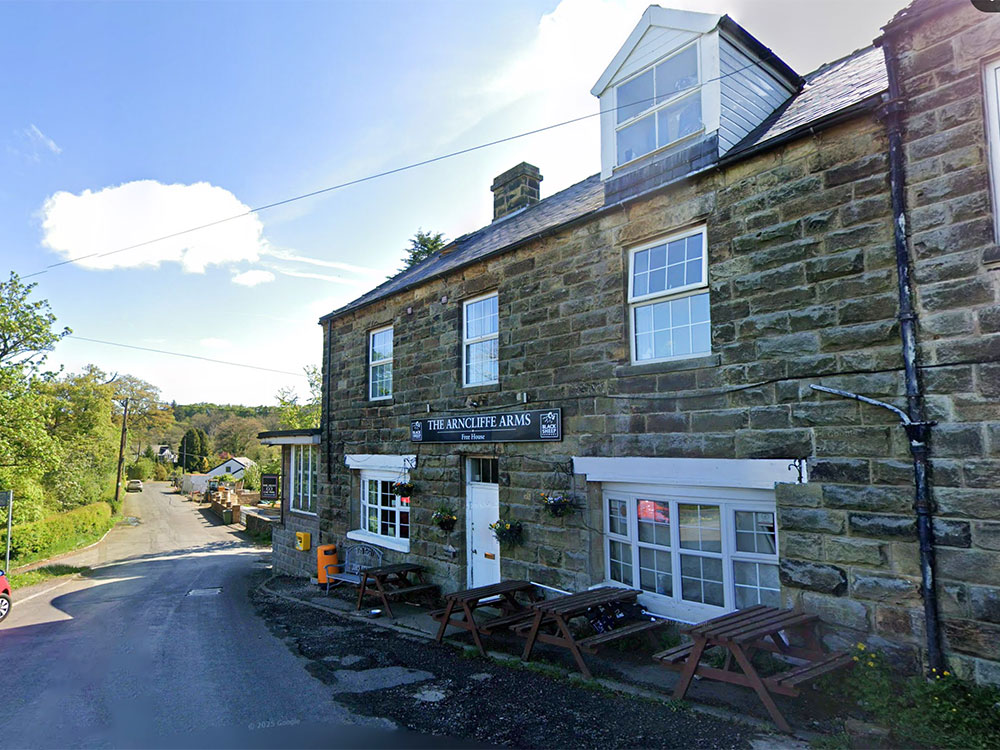
Tony Waddington, who has been a pub landlord for 50 years, is quitting the industry and leaving his taproom in the North York Moors National Park because running an independent pub is “no longer viable”.
The landlord of the Arncliffe Arms in Glaisdale, near Whitby, cited “rising VAT, the price of everything, and the increase in staff wages” as key factors in his decision to leave the pub in October.
He said: “We’ve reduced our staff numbers from four down to just two, which is my wife and I, so we’re doing extra hours. It’s affecting us all, and it is just not viable to do it any more.”
Mr Waddington, who is 68, said that he ran his first pub at 18 in Leeds city centre and called on the Government to “help us out more with tax relief or VAT, which would help us greatly, as well as National Insurance (NI) contributions for the staff that have gone up”.
He added: “We all have to contribute to society. I do understand, but it seems that there are certain parts of society paying in a lot more than other parts of society.”
Since April 2025, employers have had to pay NI at 15 per cent on salaries above £5,000, up from 13.8 per cent on salaries above £9,100.
On a visit to Scarborough last week, the Minister for Employment, Dame Diana Johnson, said Mr Waddington’s case was “really sad to hear”.
Speaking to the Local Democracy Reporting Service (LDRS), she said: “I know that hospitality, and pubs in particular, have had a hard time, especially since the Covid-19 pandemic.
“There’s been support that’s gone into supporting pubs, and there’s support that was announced around business rates, and £4.3 billion was announced to help small businesses and pubs.
“I’d also say that the national living wage has gone up, but we think that’s a fair amount for it to go up. National Insurance contributions, clearly, there are exemptions around that which employers have to pay.”
Mr Waddington, who has been landlord of the Arncliffe Arms for four and a half years, said 2026 was the “worst it has been” and for the first three months of the year he was “£14,000 down on our normal take, simply due to people not coming out”.

“They can’t afford to go to pubs any more; it’s too expensive, and supermarkets are giving beer away. They can sell alcohol to people who drink at home, suffer from mental health issues, and have no control whatsoever over them.
“At least if they come to the pub, we can advise them and help them,” he told the LDRS.
Commenting on increases to the minimum wage – which rose by 4.1 per cent to £12.71 per hour in April, for workers aged over 21 – he said: “The [Government] increased staff wages to help people survive, which I understand. The only problem is that more people become unemployed after that because nobody can afford to employ them.”
Alison Hume, the MP for Scarborough and Whitby, admitted that increases to National Insurance contributions “have hit smaller employers hard” but added that “we are now backing up our promise to help them with breaks, including obviously what we’re doing this summer”.
She told the LDRS: “We’ve reduced the VAT on attractions, we’re giving children free bus travel in August, and obviously we’re always looking at how we can help the hospitality industry – it is tough, and I would be lying if I said it wasn’t.”
Asked if he had a message for the Government, Mr Waddington said: “Please, please help the smaller businesses. This isn’t just public houses, it’s smaller businesses, little sewing shops, little grocery shops.
“Everyone’s having to cut back on staff, which is making the unemployment worse rather than better. There must be a way to help small businesses.”
Ms Johnson, the Minister for Employment, also conceded that it had “been a difficult time for hospitality” but said concrete action was being taken.
She told the LDRS: “For young people under 21, if an employer like a pub landlord takes on some young people to serve in the pub, they’re not paying National Insurance for those young people.”
She added: “But I’m not in any way saying that it’s not been a difficult time for hospitality.
“And of course, we all want to see a thriving hospitality sector, particularly in areas like Scarborough and other coastal towns in this part of Yorkshire.”