
The driver of an LNER express travelling from York to London was possibly distracted by having the train manager in the cab before a speeding incident on the East Coast Main Line.
The body responsible for investigating incidents and accidents on the UK rail network has raised concerns after the LNER express passed over a speed restricted junction at 56mph instead of 25mph.
The RAIB (Rail Accident Investigation Board) says some passengers reported through social media that they had received minor injuries.
It happened on 26 September 2025.
The service had been booked to run on the Up Fast line beyond Grantham station but was signalled onto the Up Slow line at Grantham South Junction instead. This was to allow another train to overtake.
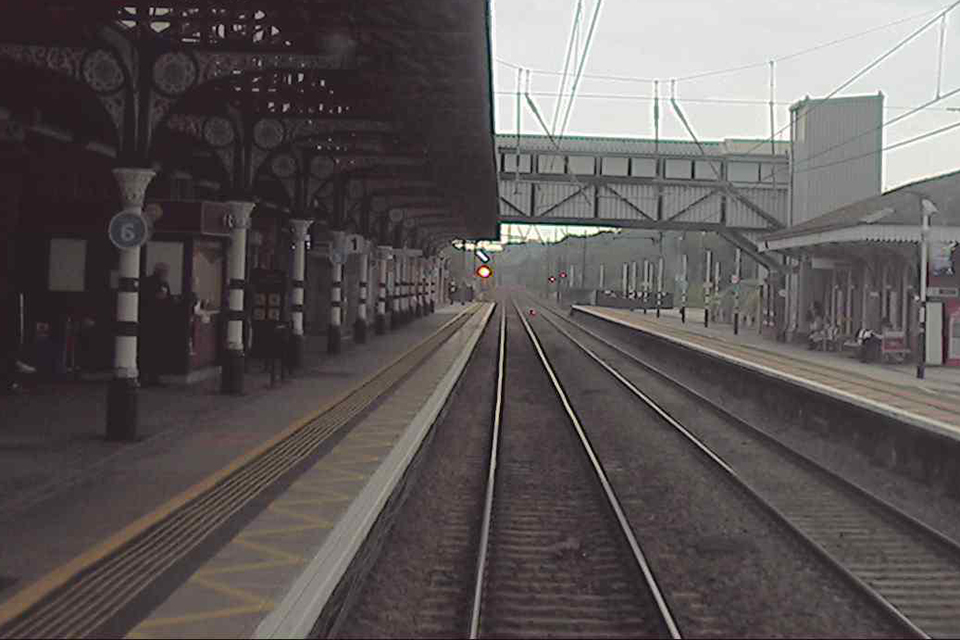
The train lurched as it was diverted by the points, causing some standing passengers to be thrown to the floor and luggage to fall from overhead racks.
The driver initially shut off traction power but then, after around four seconds, they reapplied power and continued the journey to London.
The driver did not report the incident to LNER.
The train manager became aware that one passenger had been injured by a falling suitcase caused by the train’s movement.
They checked on the passenger and reported the injury to LNER control.
Before this report, other passengers had raised concerns about the sudden lurch of the train via social media. Because of these concerns, LNER control staff asked the train manager about the nature of the incident, but they gave a limited description in response.
LNER only became aware of the full seriousness of the incident in November after reviewing internal CCTV from the train and data from the OTDR (on-train data recorder) as part of its internal investigation.
LNER then notified RAIB and Network Rail of the incident.
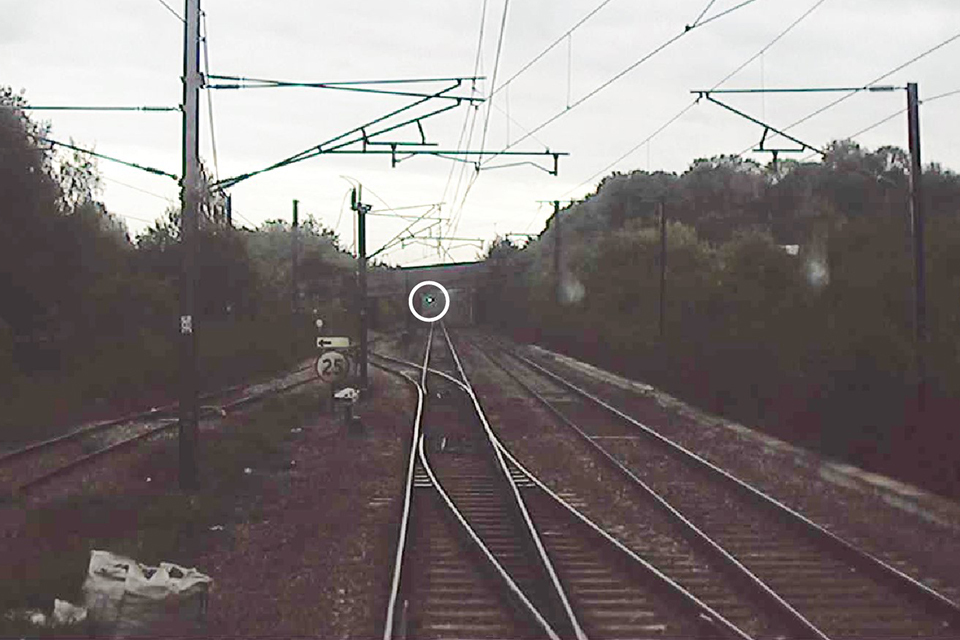
It all happened, says the report, because the driver of 1Y80 did not correctly handle their train for the diverging route after passing signal D22.
This led to the driver accelerating their train as if it were taking the straight-ahead route at Grantham South Junction, which has a higher maximum permitted speed of 115 mph.
A comparison of data obtained from the train and CCTV images shows that, around the location the train began to increase speed, the next signal ahead on the Up Fast line had come into view and was green (proceed).
That signal did not apply to train 1Y80, which was being routed onto the Up Slow line.
The signal that does control the junction was displaying yellow (caution).
The RAIB considers it likely that the driver reacted to the green signal, causing them to accelerate towards the higher permitted speed of the straight-ahead route.
This is supported by the fact that the driver continued to apply power until the train was deflected towards the Up Slow line at the junction points.
This response was either due to the driver not correctly observing the route information provided by the previous signal or forgetting this information after passing it.
Driver entered cab
As part of its investigation, LNER reviewed CCTV images from the train including the internal CCTV from the passenger saloon.
The images show that the train manager had entered the driving cab around nine minutes before the overspeed and left around three minutes afterwards.
While LNER permits its train managers to enter the driving cab if required by their duties, they are instructed to keep this to a minimum to avoid unnecessary distraction of the driver.
Neither the driver nor the train manager had initially stated that the train manager had been in the driving cab at the time of the incident.
RAIB has concluded that the driver was possibly distracted by the prolonged presence of the train manager in the cab. This, coupled with the variation from the previously booked route, may have contributed to the incident.
A number of overspeed incidents have previously been investigated by RAIB on the East Coast Main Line railway. Some of these have resulted in passenger injuries and the trains involved coming close to derailing.
The RAIB made several recommendations including train crew adhering to operating rules regarding access to driving cabs, and being aware of the risk of distraction to drivers which may occur if there is unauthorised or unnecessary access.