
One of England’s last great wildernesses should not be sacrificed to generate enough electricity for a single data centre, a public meeting was told last night.
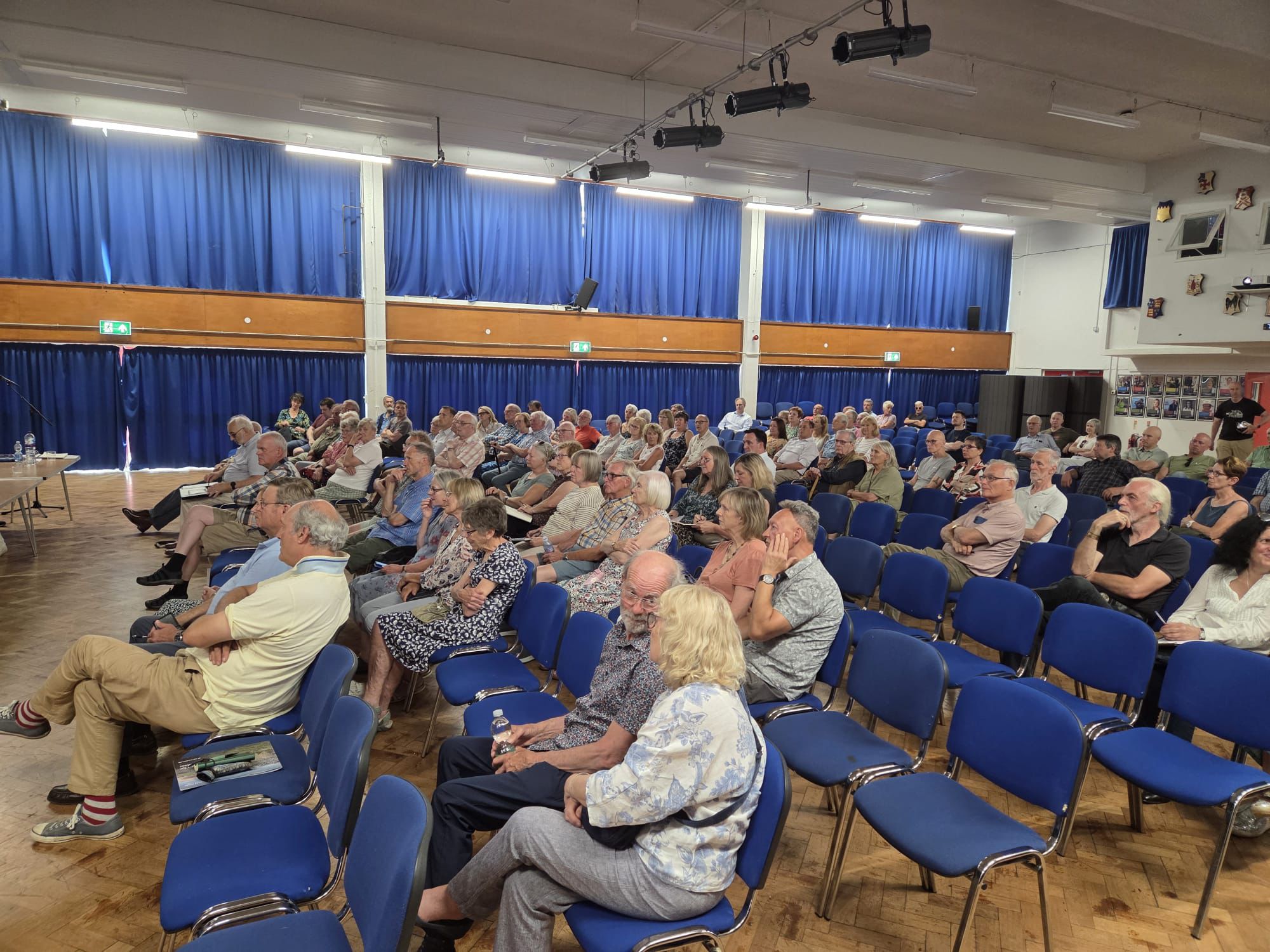
Around 150 people attended the meeting at Richmond School, which was called by the Hope Moor Wind Farm Action Group.
The event was held to highlight Fred. Olsen Renewables’ plans to build 23 wind turbines, each more than 200 metres high, on around 2,700 acres of moorland between Arkengarthdale and Teesdale.
The audience heard claims the scheme would cause irrevocable damage to the moorland and would release more CO2 stored in the peat than would be saved by the green energy production.
Tim Wilson, from the campaign group, read out an extract of a book commissioned by the late Sir Anthony Milbank, the father of Sir Ed Milbank, who owns much of the land where the wind farm would be built.
In the piece, Sir Anthony described himself as “steward of this large chunk of beautiful countryside” and said he was aware of his “responsibility” to care for it.
Mr Wilson added: “Hope Moor has been described as one of the last great wilderness areas in the country, and in my opinion, it will be an act of criminality to ruin it forever.”
The campaigner likened the Norwegian energy company behind the scheme to modern-day Vikings who were “flying back to Norway in their Learjets” to “count billions of UK taxpayer money handed out in generous subsidies” for containment — payments given to wind farm operators when turbines need to be switched off due to capacity issues within the national grid.
The meeting also heard from Richmond resident Chris Pugh, who works in the wind power industry but is opposed to the Hope Moor scheme.
He said the moorland would never be the same again if the plans were approved.
“The wind farm itself will need 20km to 30km of new gravel roads, eight metres wide. Existing roads will be altered, trees will be felled, walls will be removed, and compulsory land purchases will be sought.
“A hardcore crane pad of roughly 100m by 35m will be built at every turbine location. Miles of electricity transmission export cables will be transported and laid down before the new roads are completed.
“Approximately 30,000 cubic metres of concrete will be used in the construction phase of the wind turbine foundations and the substations. That’s about 4,000 trucks worth.”
He added: “The power produced at Hope Moore is allegedly enough to keep the lights on in 135,000 houses or one data centre in Leeds or Newcastle.
“There are so many reasons to say ‘no’ to the development of Hope Moor Wind Farm, but mine are simple — we cannot and should not turn any more of our precious wild spaces into industrialised areas, especially when there’s credible alternatives.”
The audience also heard local concerns about the process, including fears that the potential impact of the scheme on water levels in the River Swale would not be considered.
The potential for the scheme to be expanded east and west was also discussed, along with concern over how and where the wind farm would connect to the national grid.
The meeting was chaired by North Richmondshire councillor Angus Thompson, with Upper Dales councillor Yvonne Peacock, and Durham councillors Chris Foote-Wood, who represents Barnard Castle and Upper Teesdale member Richard Bell also speaking.
Euan Hutchison, UK development director at Fred. Olsen Renewables, said the company recognised that people had a range of views on the proposed wind farm.
He added: “Our stage one consultation has been running since early May and reflects a mix of perspectives, including support for the role the project could play in renewable energy generation, local benefits and the UK’s energy security, as well as questions and concerns from the local community.
“The scoping report is the first stage in the full environmental impact assessment, which is being carried out by independent, accredited specialists. This will consider potential effects in detail across a range of topics, including hydrology and flood risk, peat and carbon balance, ecology (including birdlife), landscape, and construction impacts. These assessments are subject to independent scrutiny throughout the planning process.
“At this stage, the project is being developed as a standalone scheme, and there are no plans for additional turbines beyond those currently proposed. Recent, industry-wide changes to grid connection processes mean the grid connection will now be progressed separately.
“Once details are confirmed, the connection route and method will be taken forward through a separate application, which will follow the relevant statutory process, including consultation as required.
Mr Hutchinson said the company was continuing to engage with local stakeholders and welcomed feedback through its stage one consultation, which runs until June 30.
“Feedback received will play an important role in shaping the proposals as we move forward,” he added.