
Take a journey through time and tide as Small Island takes residency at Leeds Playhouse, bringing Andrea Levy’s novel – a cornerstone of modern literature – to life, in Helen Edmundson’s sweeping stage adaptation.
Directed by Matthew Xia, this co-production, arriving at Leeds Playhouse before touring, revisits the Windrush story through four intersecting lives, spanning continents, cultures and the fragile promise of belonging.
We open in the midst of a hurricane, in the schoolhouse of Jamaica, shifting between incoming destruction and the internal narrative of Hortense, an opening that quietly foreshadows the story to follow.
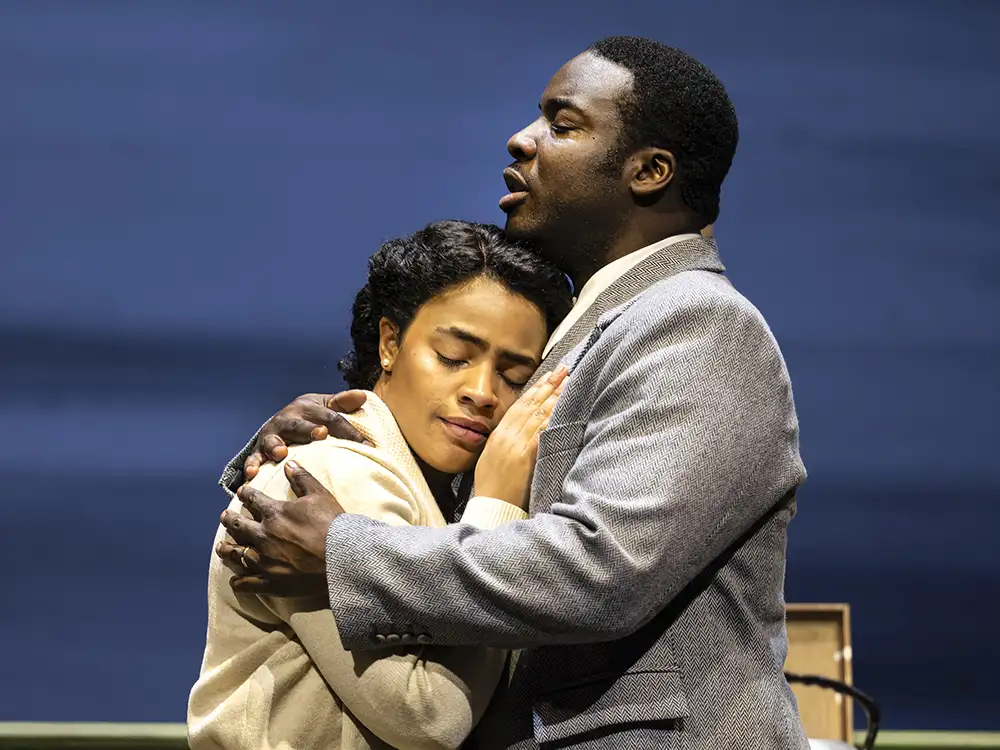
One by one we meet those at the heart of our piece; Hortense and Gilbert, Jamaican migrants longing for life in the ‘mother country’ which feels anything but maternal, alongside Queenie and Bernard, an English couple navigating their own fractures in a changing world. It’s a story that moves fluidly between romance and reality, hope and hostility; but cleverly never settling too comfortably within itself.
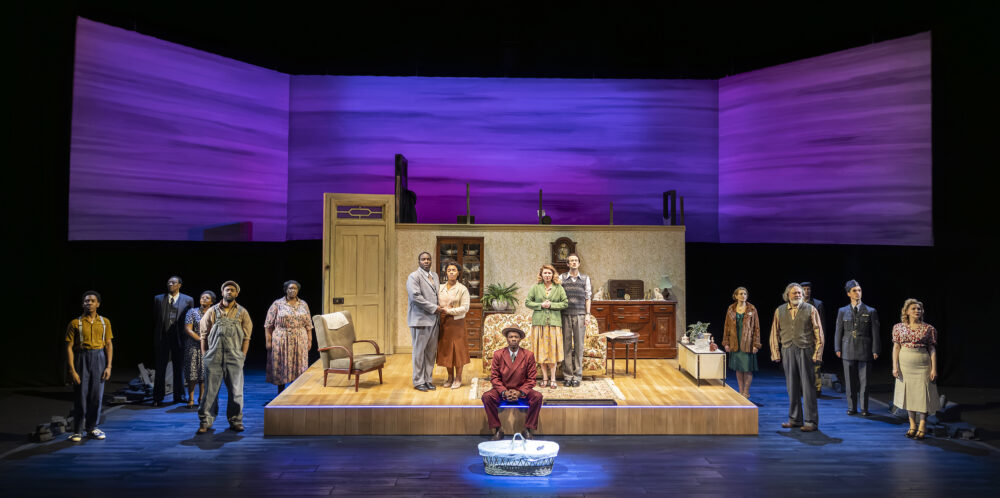
Soon the warmth of Jamaica gives way to the chill of war-torn Britain, as time jumps across each sequence. Projections detail the passing years, whilst masking each scene change, a device that could feel clunky, yet instead works in the production’s favour. It delivers context with clarity, allowing the dialogue to remain focused and immediate. It’s within these transitions that Small Island quietly reveals the evening in store: expansive, rich and deeply human.
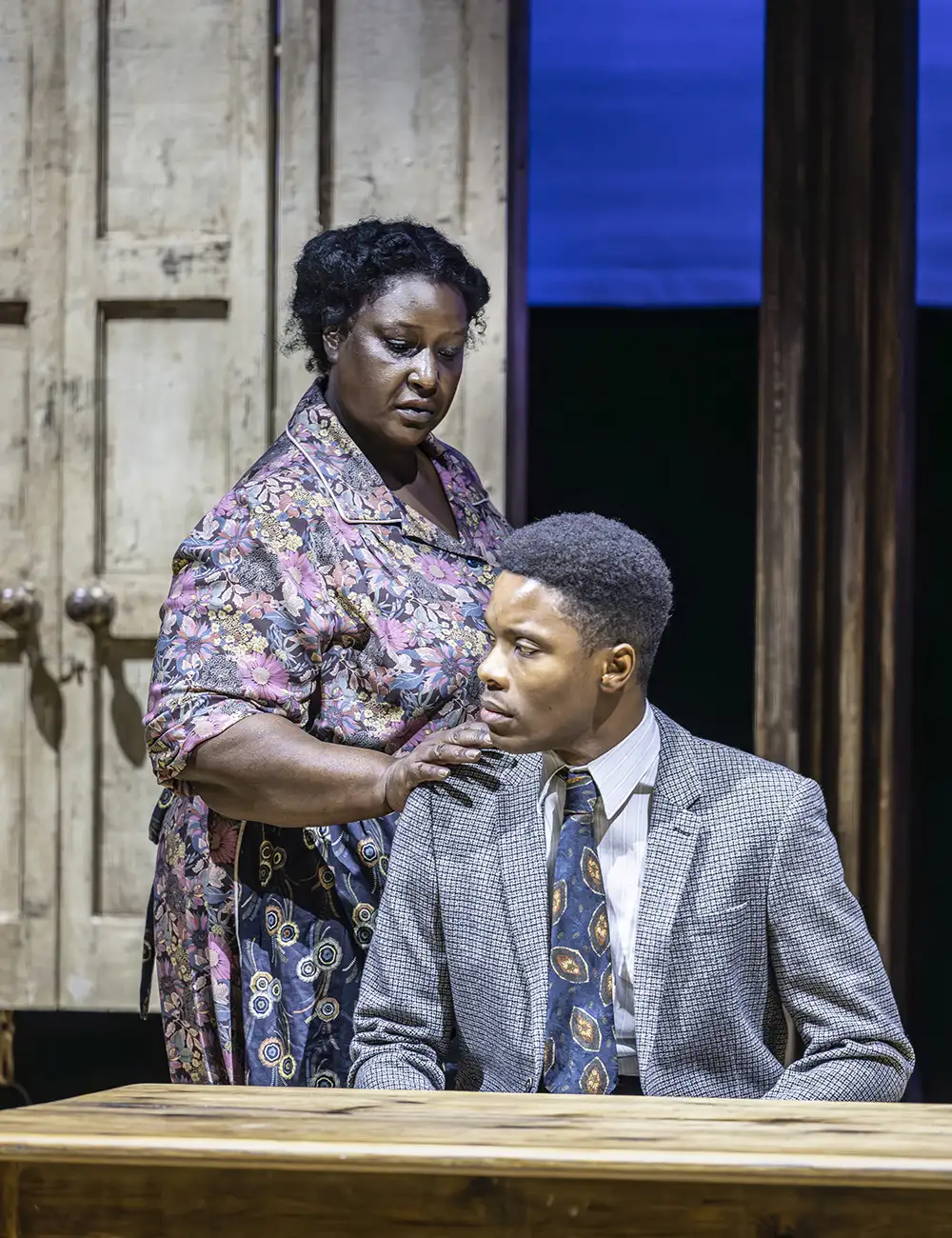
The strength of this production lies in its richly drawn performances, each actor carving out characters that feel both specific and deeply human. Anna Crichlow’s Hortense is a masterclass in restraint; smart, dignified, and unwavering, with a ‘stiff upper lip’ that feels almost inherently British. Yet beneath that composure, there’s a slow, satisfying unravelling, particularly in her dynamic with Daniel Ward’s Gilbert. Ward brings a cheeky charm and warmth that offsets Hortense’s rigidity beautifully, making their evolving relationship one you can’t help but root for.
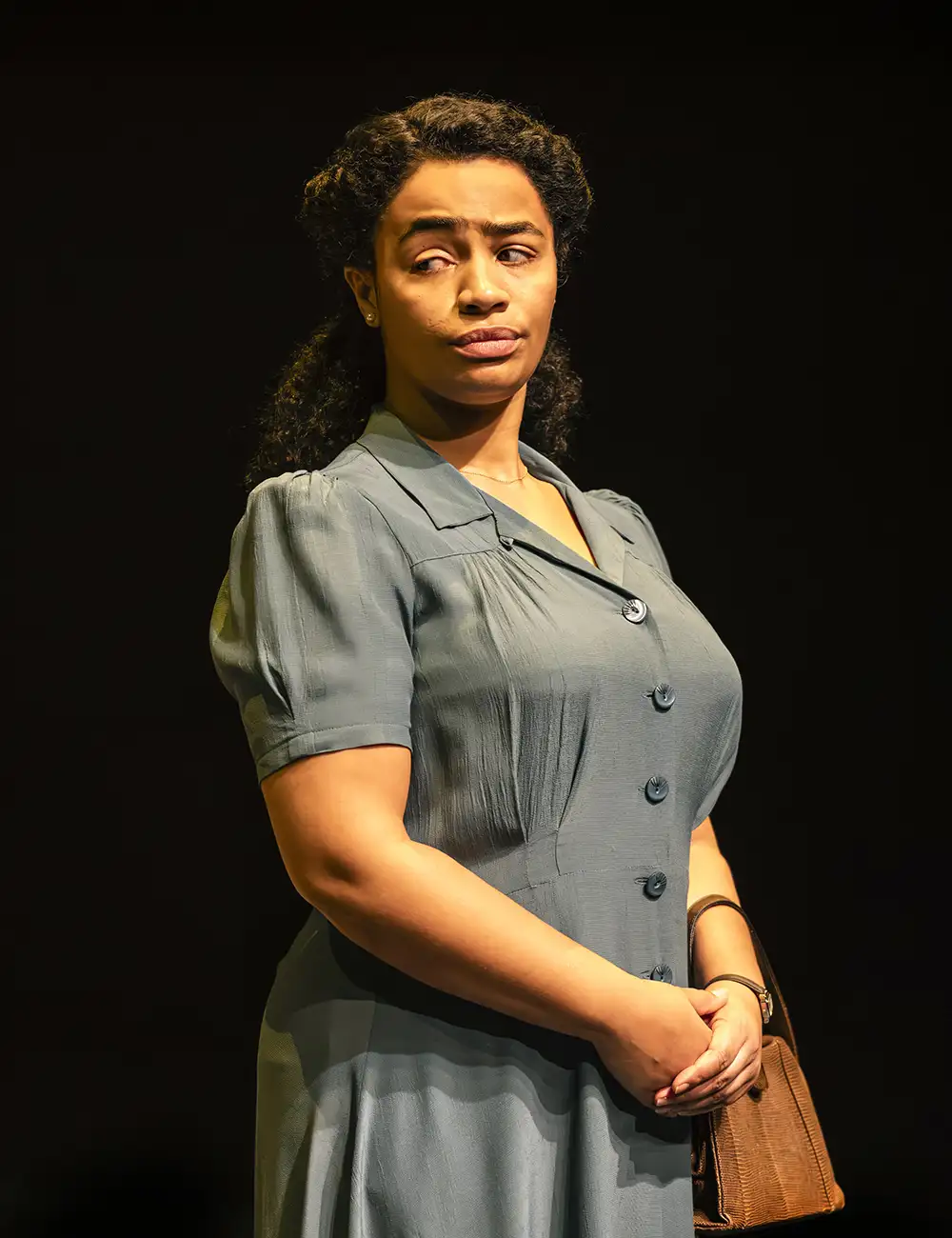
Bronté Barbé’s Queenie arrives like a gust of fresh air, her thick Lancashire accent cutting cleanly through tension. There’s a natural charm and effervescence to her performance, but what’s most compelling is the gradual shift – her infectious optimism beginning to falter as the world around her proves far less open-hearted than she is.
This is thrown into sharp relief opposite Mark Arends’ Bernard, whose traditional, meek, and reserved nature provides contrast, particularly when set against Rhys Stephenson’s Michael. Stephenson brings a different energy entirely, one that makes Queenie’s connection with him feel quietly revolutionary, charged with possibility and change.
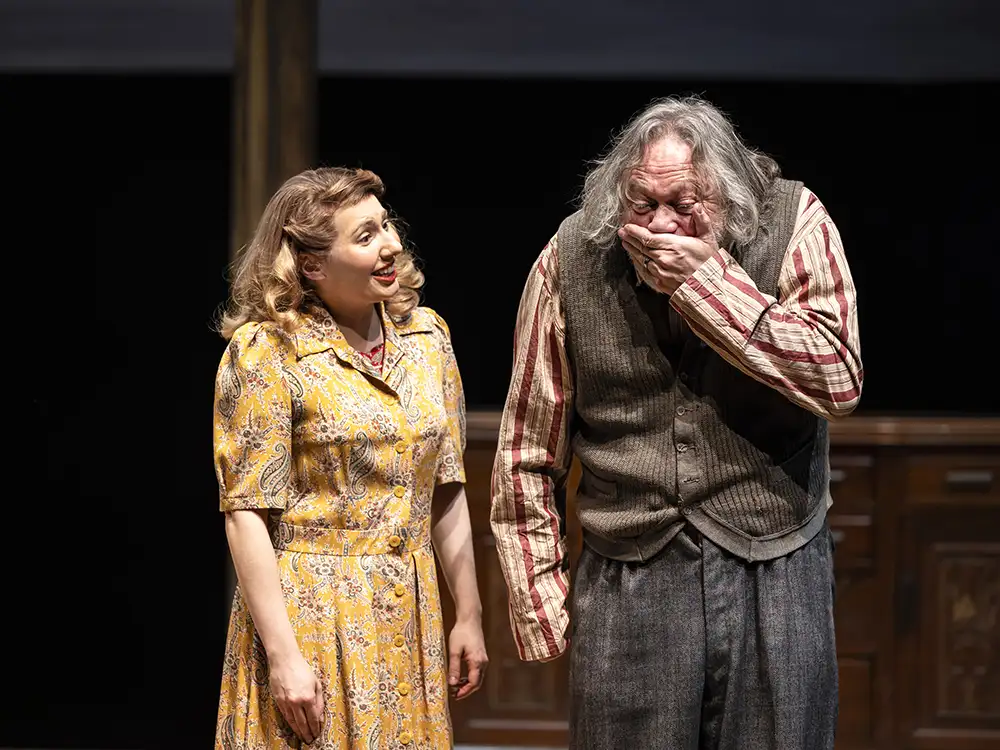
And then there is Paul Hawkyard’s Arthur, Bernard’s shell-shocked father, who despite being non-verbal, arguably says more than anyone else on stage. His performance is laced with a gentle kindness that resonates long after he leaves it. The entire ensemble as a whole commits fully and fearlessly. Relationships feel lived-in rather than performed, particularly in the quieter moments, glances, hesitations, the weight of what’s left unsaid.
What’s striking about this production is its scale. Clocking in at over three hours, it could easily feel prolonged, but instead, it breathes. Scenes flow with cinematic ease, aided by Simon Kenny’s design, which shifts seamlessly from sun-drenched shores to grey London streets, while calypso rhythms weave through the narrative like a heartbeat.
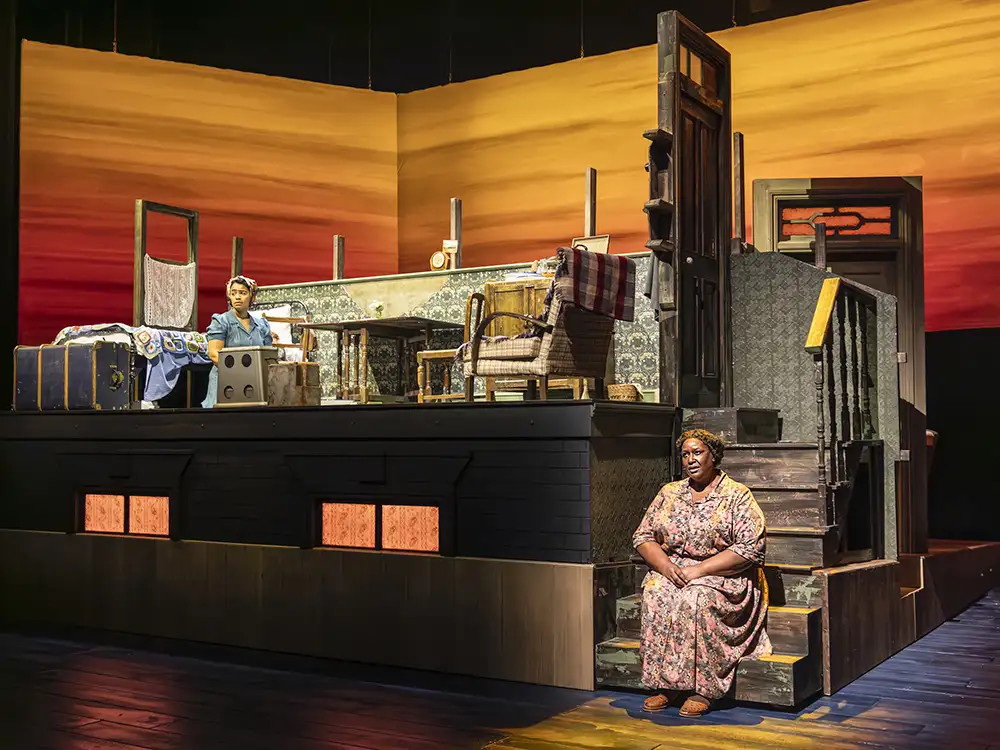
The staging is equally effective, a platform, centred amongst the large stage, that anchors the action without ever feeling restrictive, allowing characters to fully inhabit the space. Paired with Ciarán Cunningham’s lighting design, each moment is subtly heightened, guiding focus without distraction.
Whilst intimate in its storytelling, it never loses sight of the bigger picture. Small Island confronts racism, displacement, and identity head-on, but never in a way that feels didactic. Instead, it invites you in, then asks you to sit with discomfort. And while the weight of the narrative is ever-present, so too is the humour – its reception at times uncertain – as even the most shocking moments draw uneasy laughter from the audience.
There is, however, a challenge; this is a production that asks for your time and attention. But give it both, and it rewards you with something rare: a piece of theatre that feels not just relevant, but necessary. As the final moments land, you’re left not with neat resolution, but with something far more powerful – a sense of shared history still echoing. As the lights come up, it’s clear Small Island isn’t just telling a story of the past, it’s holding a mirror to the present, asking quietly but firmly what we choose to see.

Small Island is at Leeds Playhouse until Saturday 28 March, before heading on tour.
Book your tickets now, for an unforgettable journey. Tickets available via the Leeds Playhouse website, from £16.50.