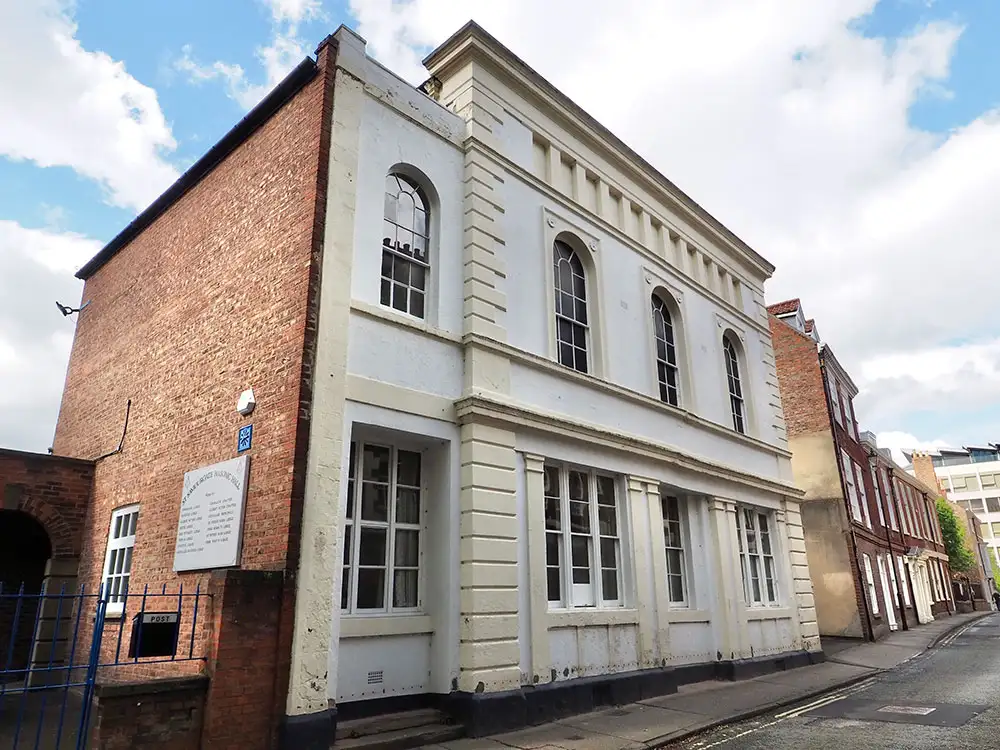

An historic Freemasons’ meeting hall is set for repairs under new plans.
The Masonic Hall, in St Saviourgate, would undergo repairs including removing loose paint and filling cracks to stop water seeping into the front of the building.
An application lodged by planning agents Bartlett Mettham stated the replacement of existing finishes with traditional materials would reverse the damage caused by inappropriate maintenance.
Plans lodged with City of York Council would see works done to the Grade II-listed building, which was constructed in 1845-6, to address deterioration caused by weathering.
The deterioration has been caused by water run-off and trapped moisture, according to the application.
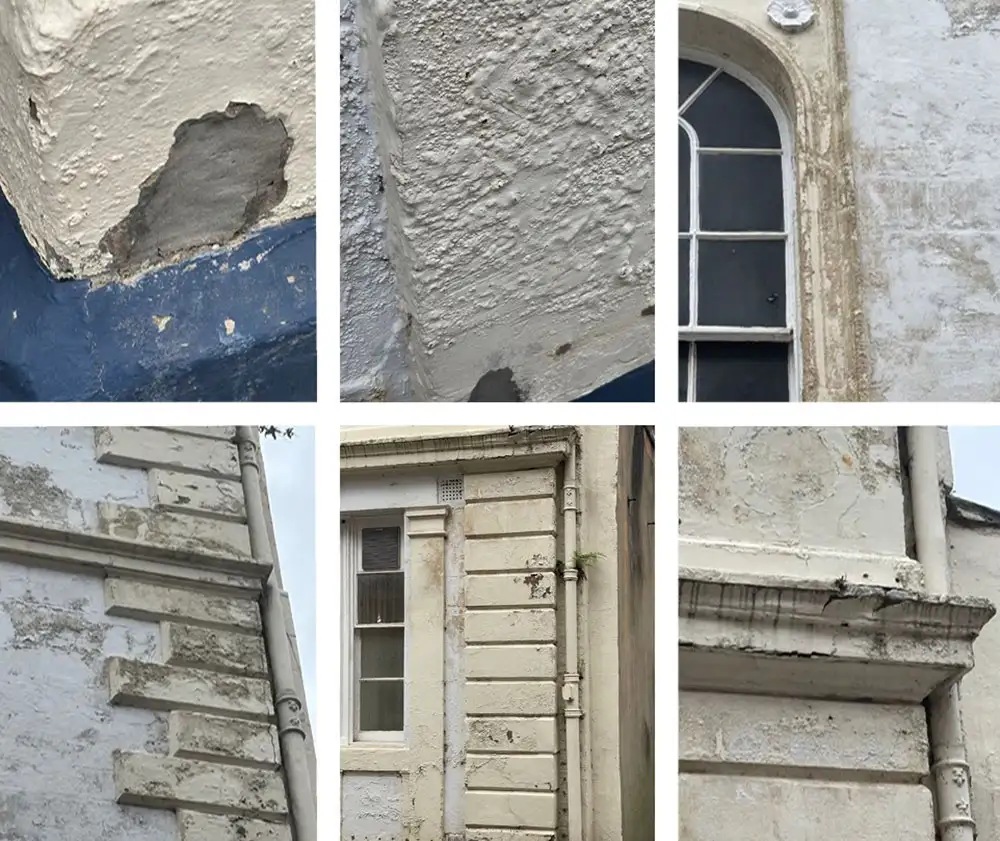
Large, irregular sheets of white topcoat have peeled away to expose heavily-weathered render underneath in what applicants said was the most severe defect.
Water pooling has also lead to dark green algae staining first floor across arched windowsills on the first floor with weeds also growing in rainwater pipes and elsewhere.
Widespread paint flaking, bubbling and staining has also been found on base plinths and under window recessed panels.
Approval of the plans would see scaffolding go up at the front of the building so repairs could take place.
St Saviourgate would remain open to traffic during the works.
Weeds and other organic matter would be cleared and non-destructive masonry biocide would be applied to the building.
Failing paint layers would be stripped back and the substrate would then be inspected for underlying defects.
Structurally compromised or blown render would be cut back and repaired using traditional methods.
The front of the building would then be finished with materials such as a material silicate paste or traditional limewash.
Plans stated the repairs aimed to preserve the historic building, extend its lifespan and safeguard its long-term structural survival.
The application stated: “The proposed conservation works represent a highly beneficial, restorative, and essential intervention for the Masonic Hall.
“Adopting a strategy of minimal intervention ensures that the historic fabric is structurally safeguarded, avoiding the accelerated decay, freeze thaw spalling, and internal dampness that would inevitably occur under a do nothing scenario.
“Ultimately, these sensitive repairs will restore the building’s classical symmetry and architectural clarity, delivering a substantial visual enhancement to the streetscape and the wider York Central Historic Core Conservation Area.”
The hall was originally built opened as the Institute for Popular Science and Literature in 1846 before being converted into a Masonic Hall in the 1880s.