
Work is underway in York to try and stop water bills from significantly increasing.
According to a new report, City of York Council and Yorkshire Water are working closely to secure funding so that surface water can be removed from combined sewer systems.
A council report says the water industry places a significant emphasis on the highway drainage carried by overflow networks.
And managing those networks is vital to keep bills down.
Yorkshire Water says £990m has been spent on improving its infrastructure across the county in 2025/6, including replacing 108 miles of mains.
It comes as councillors are set to discuss the health of York’s waterways and infrastructure next Tuesday (21 July).
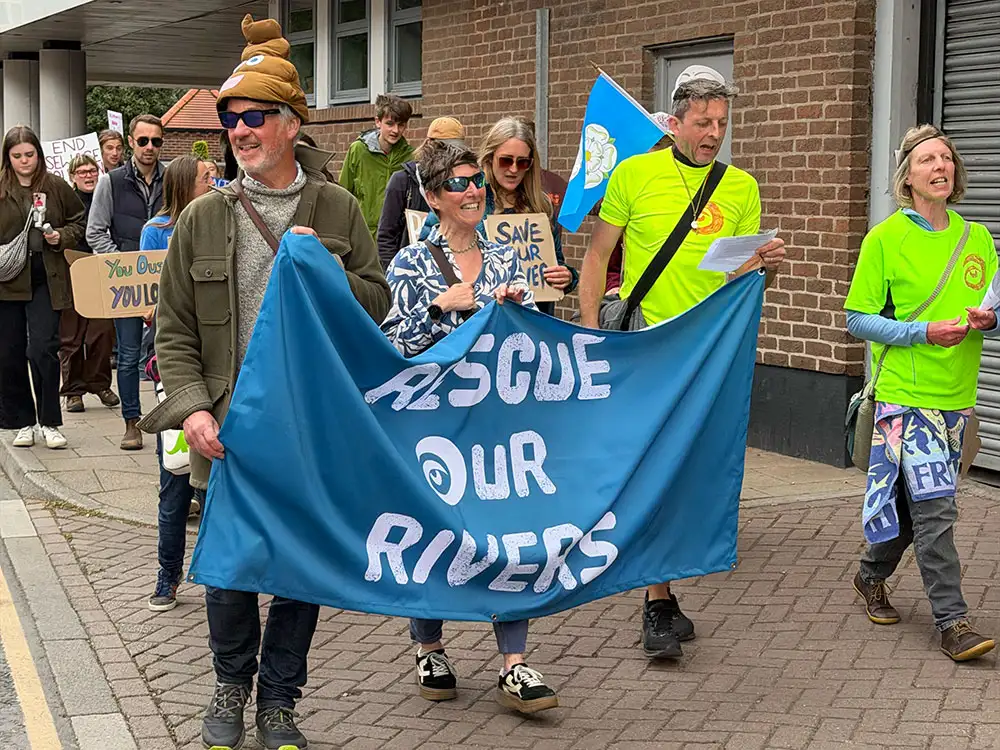
The update also comes after almost 100 people gathered at the River Ouse in May to protest against sewage in the waterway as part of a national day of action.
Government ministers have unveiled proposed changed to the way the water industry is regulated which include penalties of up to £500,000 for companies as part of a crackdown on pollution.
Ouse so polluted
York council’s report stated it was currently working on an Ousewem project to gather evidence about what factors were influencing the health of the river.
It added it included work with the University of York to assess the effect of combined sewer overflows (CSOs).
CSOs are typically found in older sewage systems and see surface water run-off and wastewater transported through the same pipe.
They can become overwhelmed during heavy rain which results in excess water being discharged into waterways such as rivers including the Ouse.
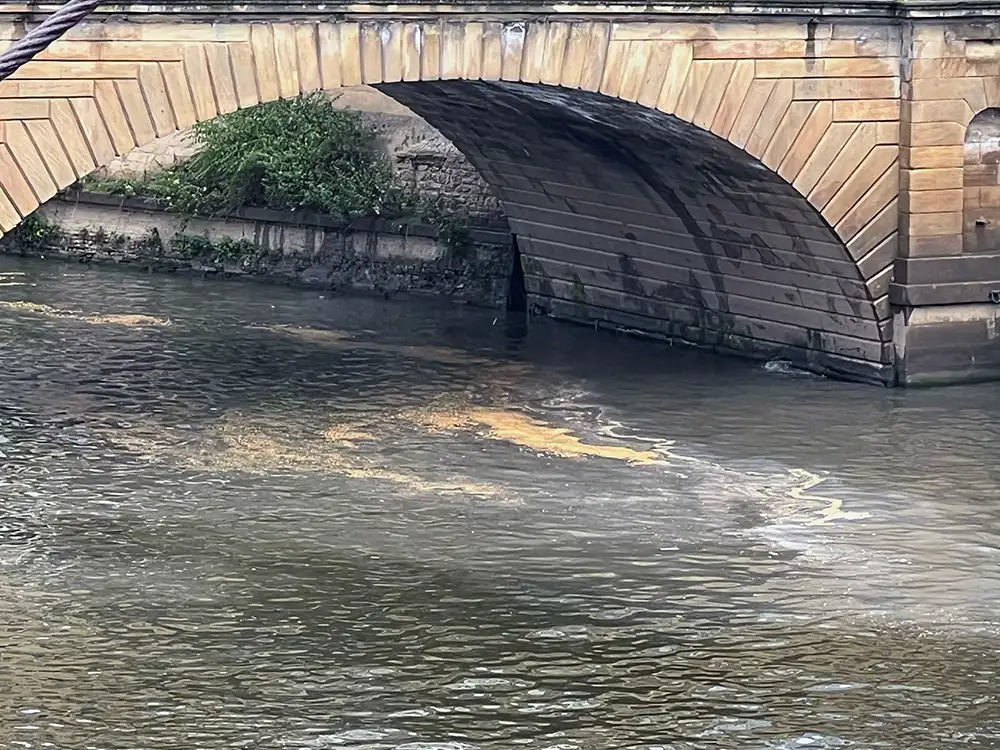
Campaigners in May said the Ouse was the third-most polluted river in England.
Parliament data showed wastewater including sewage was discharged into the River Ouse in and around York for 24,872 hours in 2024.
The council’s report stated Yorkshire Water would need to remove surface water from the city’s Victorian combined sewage networks to achieve their targets.
It added they were working to secure funding and hoped it would deliver benefits including reducing flood risks and improving biodiversity and the public realm.
The report stated: “Nationally the water industry are placing a significant emphasis on the component of highway drainage that their overflows carry and that the disconnection of these inputs is vital to manage these issues especially if water bills are not to be significantly increased.”
Yorkshire Water stated in an update to the council’s place scrutiny committee that it recognised CSOs were a significant concern and it must reduce the frequency and duration of discharges.
The company added it was investing £1.5bn to reduce storm overflow discharges.
The company said: “There is a commonly held perception that discharges from storm overflows have increased significantly in recent years, however, this is not necessarily the case.
“A more accurate interpretation is that the visibility and reporting of discharges has improved, primarily due to the widespread installation of Event Duration Monitoring (EDM) devices.
“As a result, there is now a more complete, and robust, dataset on overflow discharges than was previously available.”