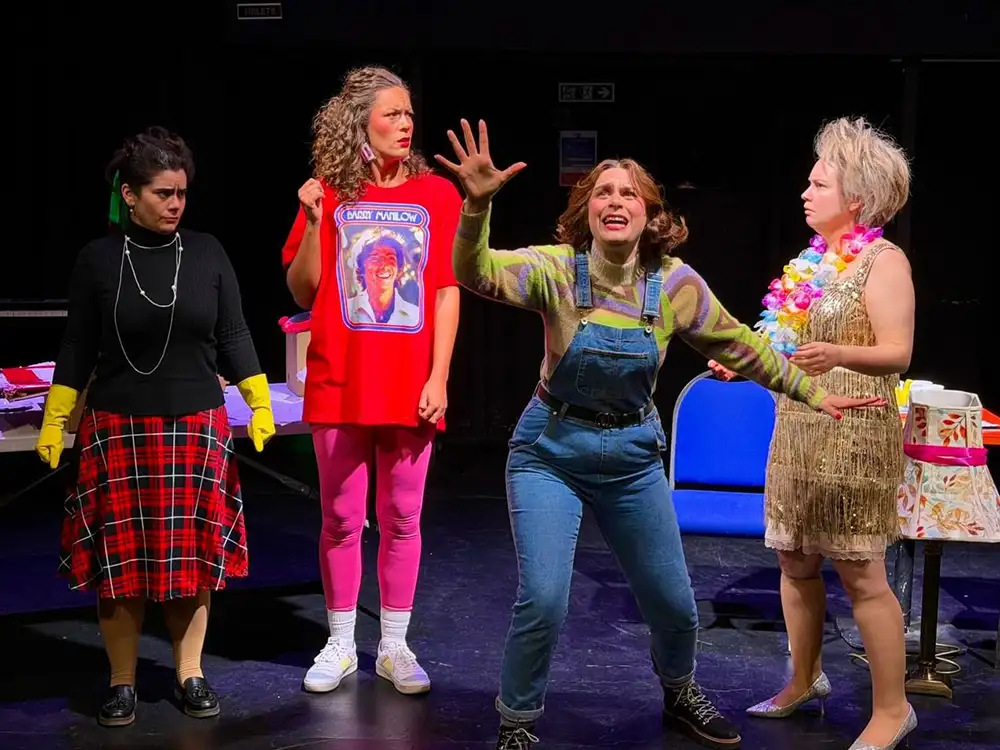

A trio of agoraphobes, a church hall, and a jumble sale with more emotional baggage than bric-a-brac – what could possibly go wrong? Quite a lot, as it happens.
Bazaar and Rummage has opened its doors at Theatre@41, Monkgate, this week, and The Penny Magpie Theatre Company have dusted off this sharp, socially-observant gem with confidence and clarity.
As with all of Sue Townsend’s creations, this is a piece that refuses to sit politely in the corner. Politics, religion, class, and mental health are not subtle undercurrents here; they are front and centre, woven unapologetically through every exchange.
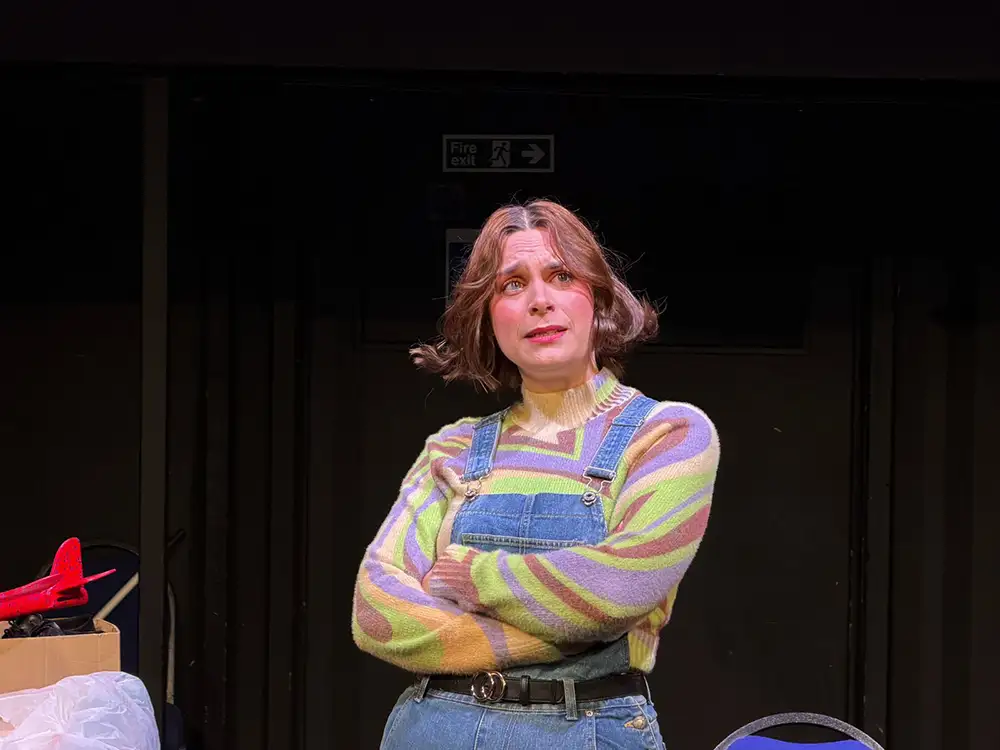
Director Alexander King makes a clear choice from the outset; the staging begins bare, almost stark, as tables are assembled and knick-knacks carefully placed. With each object comes a story, and with each story, another layer of these women is revealed. It is conversation that builds the set, rather than scenery alone, an effective reminder that the real clutter discovered here is emotional. And looming above this action, the church hall cross becomes its own silent character, a watchful presence over the chaos that unfolds beneath it.
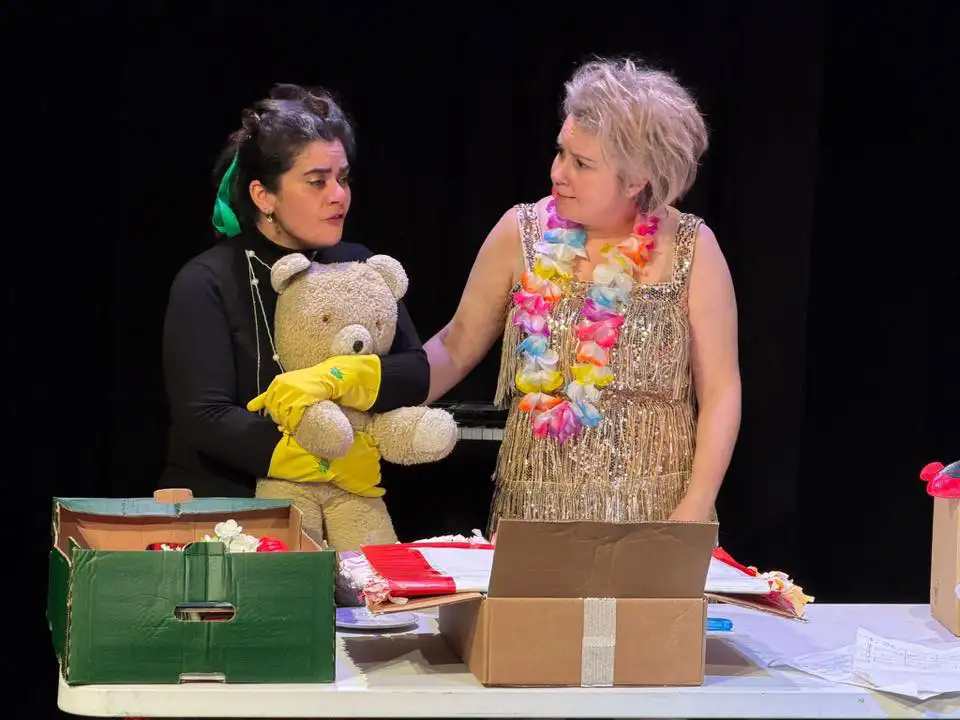
Into this carefully constructed space march the social workers. Helen Lewis’ Gwenda is a tightly wound coil of missionary narcissism and barely concealed fragility. Pacing in plaid, she is polished on the surface but permanently close to unravelling. Alongside her is YorkMix’s Laura Castle as trainee Fliss – with sharp awareness her bright-eyed professionalism slowly shifts into quiet scepticism. She soon recognises Gwenda not as a mentor, but as a cautionary tale. Together, they anchor the pace, steering, or at least attempting to steer, the increasingly flammable gathering.
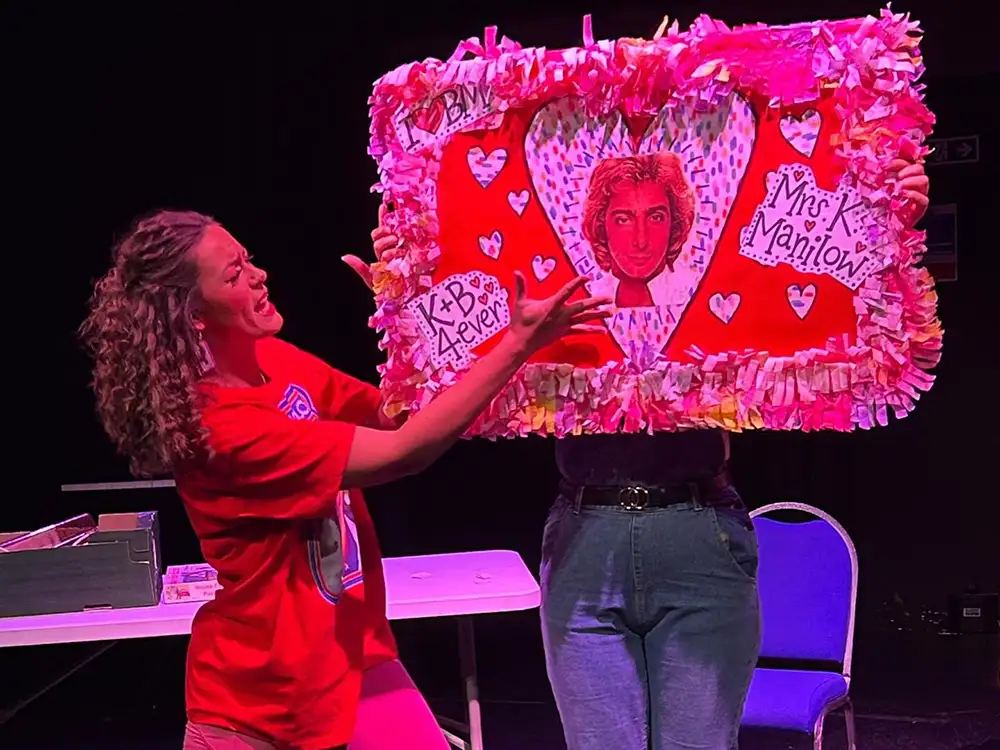
And soon, one by one, the women arrive. Hannah Thornton’s Katrina sweeps in first, a crimp-haired, Barry Manilow-loving whirlwind with tales of glamour and grandeur. Thornton, who also choreographs the production, injects the unexpected musical interludes with irresistible energy, yet ensures they remain rooted in character rather than novelty. Her physicality is wonderfully elastic, her bravado just brittle enough to hint at the cracks beneath.
Sonia Di Lorenzo’s Bell-Bell (or Isobel, as so desperately requested) emerges more tentatively. Often half-hidden, she drifts around the edges of the space, clinging to her yellow marigolds. Di Lorenzo handles the slow reveal beautifully, allowing Bell-Bell’s anxieties to surface in fragments, each one deepening our understanding of her world.
Then there is Joy Warner’s Margaret, wild-haired and sharp-tongued. Confident in voice but not in venture, she storms through the hall with expletives and bravado, masking vulnerability with volume. The friction between the three women feels authentic – rivalries simmer and alliances wobble.
As so often with Townsend, it is the unseen characters who linger most powerfully: Maurice, Darren, Gwenda’s revered father. Though never present, they are vividly constructed through recollection and implication, the script makes clear where much of the damage lies, quietly interrogating the foundations upon which these women’s fears have been built.
King’s direction balances the production’s heightened comedic moments with space to breathe. The temptation with characters this bold would be to push them into a caricature, but instead we are offered flashes of stillness. The musical numbers, too, are handled with restraint; they serve the narrative rather than distract from it, keeping character at the heart of every performance.
What lingers most is the play’s refusal to offer easy answers. How should we treat mental health? Who truly knows what is best? Where does support end and control begin? These questions are posed without neat resolution, leaving the audience to carry this thinking home with them.
The comedy here is sharp, occasionally uncomfortable. Brutal truths are wrapped in throwaway lines, and the audience finds itself suspended at times between shock and laughter, unsure whether to wince or applaud. That tension is deliberate, and also extremely effective. And transformation sits quietly at the centre of it all. We are not handed tidy conclusions, but we are left imagining possibility, and perhaps that is enough.
Bazaar and Rummage is open for business at Theatre@41 this week – and this is one narrative well worth rummaging through.

Bazaar and Rummage is at Theatre@41, Monkgate, until Saturday 21 February. Tickets are £15 and available via the theatre website.