
Plans for a new link to the site of a major regeneration project in York have been backed despite warnings it is flawed.
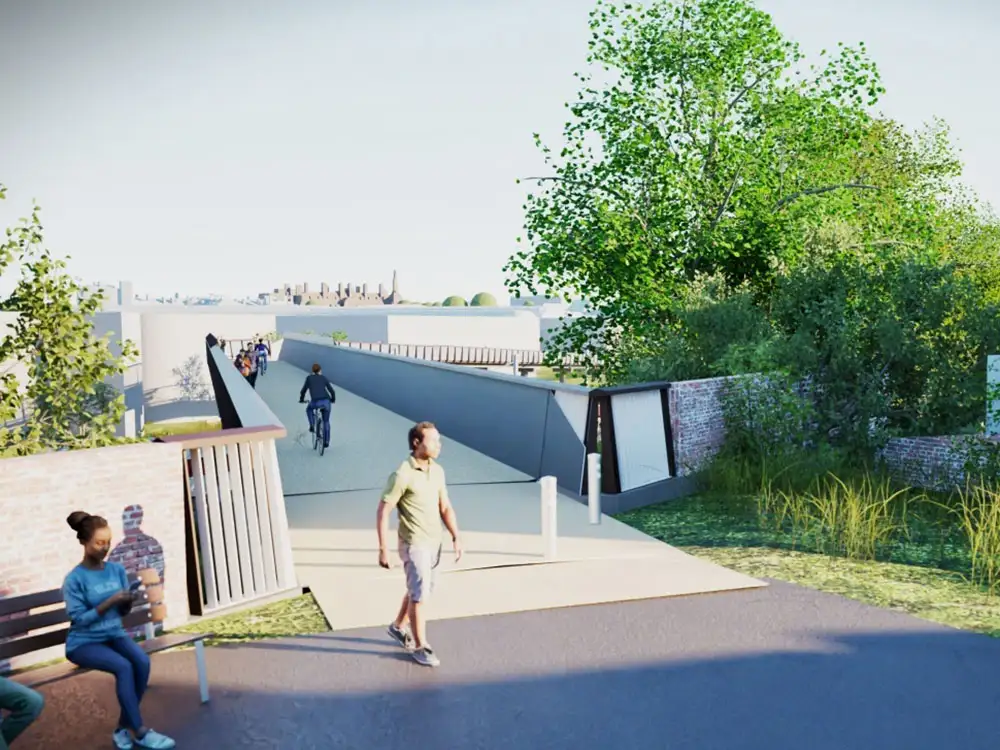
An application to install a new footbridge spanning railway lines between Holgate and York Central has been approved by councillors.
Avison Young’s David Sweeting, who represented applicants Network Rail, said the new Wilton Rise footbridge would provide an accessible link to York Central and unlock its commercial and economic benefits.
But some criticised the scheme, saying the bridge was too narrow, posed safety risks and would leave residents exposed to more noise as footfall increases.
City of York Council’s planning committee approved the application on Thursday, July 9.
Network Rail’s plans are set to see the new 4m-wide bridge installed between Upper St Paul’s Terrace on the Holgate side and Cinder Lane in York Central.
The existing Wilton Rise footbridge, which dates back to the Victorian era, is set to be demolished once the new structure is installed and open.
Benches and flat intervals providing rest stops for users and step-free ramps are included as part of the plans.
Pedestrians and cyclists are set to be ‘soft-segregated’ by a raised white line.
The new bridge is set to be built in phases to maintain access between Holgate and York Central.
Improvements to routes to Holgate Road are set to be made as part of the wider York Central scheme but they do not form part of plans for the bridge.
One of them, Wilton Rise, is unadopted meaning the council is not responsible for its maintenance and it is one of the city’s worst roads for pot holes.
Collision fears

Council planning officers recommended approving the application ahead of Thursday’s meeting but 14 objections were lodged against it.
Marjorie Donaldson, who spoke on behalf of Holgate residents, told the meeting some felt assessments of the potential impact on them were insufficient.
She said: “Some people feel there’ll be too many people coming onto Upper St Paul’s Terrace, the top of it is a turning bay and it’s difficult already.
“People at the top of the street and Wilton Rise are already affected by noise from footfall and there’s the issue of safety in terms of the railway.”
Katherine Blaker, of the York Cycle Campaign, said the lack of space on the bridge would mean pedestrians and cyclists would struggle to stay separate, posing a danger to users.
Ms Blaker said: “We support the replacement of the current footbridge with a step-free accessible crossing.
“But the reality is that this flawed design will squeeze pedestrians and cyclists into the same space, increasing the risk of collision.”
‘Critical infrastructure’

Disability rights activist Flick Williams said opportunities to future-proof the structure in its design had been missed.
She said: “The replacement of an inaccessible bridge is welcome but the compromises that have been made are a bridge too far.
“It’s too narrow, all other problems stem from that.”
Cllr Kallum Taylor, Labour ward councillor for Holgate, said he understood the concerns but the bridge would deliver a huge improvement.
Mr Sweeting said the bridge could not be any wider or else it would conflict with the railway below, utility infrastructure and elements of York Central.
He said: “The current bridge is narrow, stepped and inaccessible, this delivers a strategic active travel connection between Holgate, York Central, the station and the city centre.
“It’s a critical piece of infrastructure underpinning York Central.
“It will help unlock the commercial and employment elements of the project, supporting significant economic growth in York.”