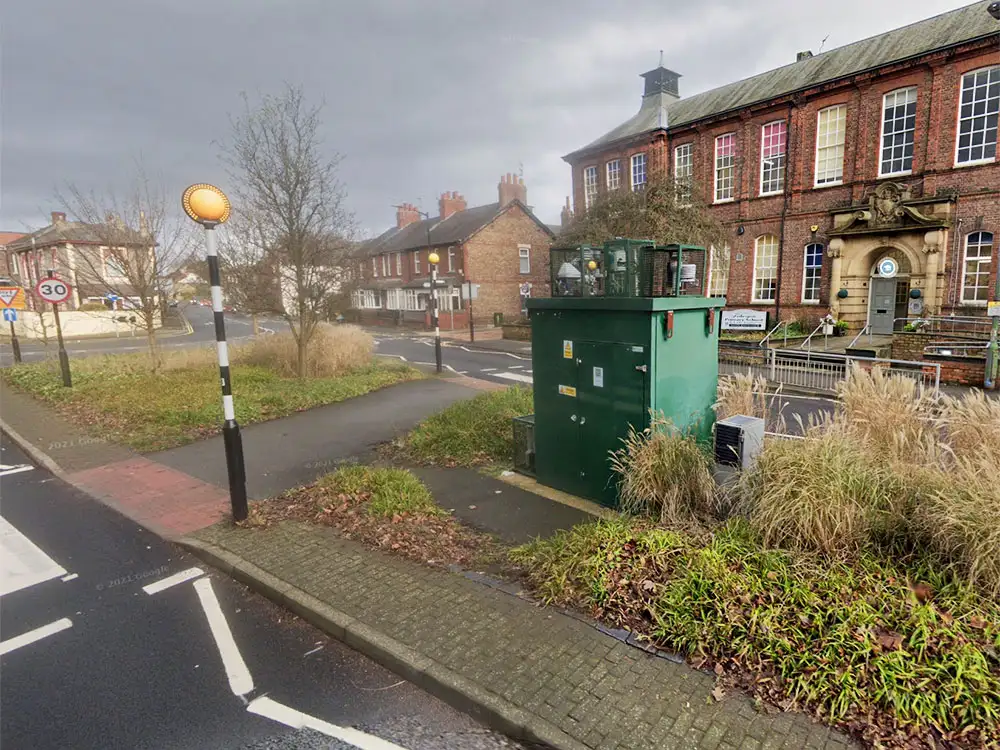

The part of York with the highest recorded air pollution levels has been revealed in the latest air quality figures for the city.
The highest concentration of nitrogen dioxide (NO2) was recorded near the junction of Gillygate and Bootham at 29.9 micrograms per cubic metre (µg/m3).
City of York Council’s Air Quality Annual Report showed the level recorded there in 2025 was down year-on-year and every monitored part of the city was below the 40µg/m3 legal limit.
The report stated council efforts to tackle air pollution included working to improve bus services, encouraging low emission taxis and increasing its use of electric vehicles.
It comes as data in the report showed 2025 was the second year running that air pollution across monitoring sites in York remained below legal limits for NO2 emissions.

Vehicles are the single-largest source of NO2 emissions which were at their lowest recorded levels in more than 15 years across all monitoring sites bar one last year.
NO2 emissions in York remain above World Health Organisation (WHO) guidelines, 10µg/m3, which the report stated was typical of much of the UK.
The highest recorded levels of particulate matter (PM), including from fossil fuel burning, dust, soot and other chemicals, were 17µg/m3 at Acomb’s Plantation Drive for PM10 and 9.6µg/m3 at Gillygate.
PM levels were below national limits and the PM10 level at Plantation Drive was down, but the PM2.5 level in Gillygate was above 2024’s highest amount monitored, 9µg/m3.
The Blossom Street and Holgate Road junction had the second-highest maximum concentration of NO2 which was representative of long-term exposure in 2025 at 29µg/m3.
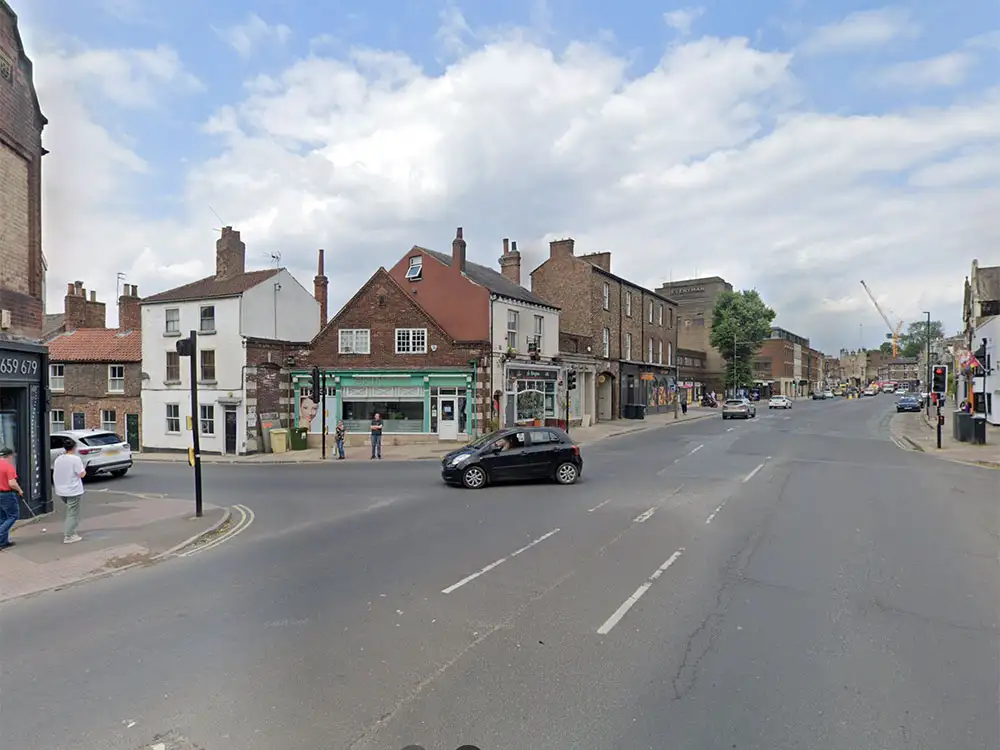
Lawrence Street had the third-highest level, 26.8µg/m3, followed by the Fishergate and Paragon Street with 26µg/m3 and the Rougier Street and George Hudson Street junction, 25.6µg/m3.
Coppergate’s level was 24.5µg/m3, followed by Fulford with 23.1 and Nunnery Lane’s junction with Price’s Lane, 22.8µg/m3 and Salisbury Terrace, 19.4µg/m3.
Levels of NO2 emissions were down year-on-year at every monitoring site except the Fishergate and Paragon Street junction where they rose by 2.5 per cent.
Monitoring of PM10 levels in York showed Plantation Drive’s 17µg/m3 last year was down from 17.8µg/m3 in 2024.
But Fishergate’s level rose from 15.4µg/m3 to 16.6µg/m3 and Bootham’s went up from 12.6µg/m3 to 13.2µg/m3.

After Gillygate, Bootham had the highest PM2.5 concentration at 8.7µg/m3, followed by Fishergate, 8.6µg/m3, and Holgate, 8.3µg/m3.
All levels were at three-year highs but remained below the target mean of 10µg/m3.
The council’s report stated short-term trends and yearly changes in PM were less dominated by local pollution, with those emissions tending to come from heating systems, waste and farming.
Gillygate trial
Efforts to tackle pollution in 2025 included encouraging bus use, with the council estimating Park And Ride use in December alone resulted in 61,700 less cars travelling into central York.
A year-long traffic signal sequencing trial aiming to reduce standing traffic in Gillygate concluded at the end of 2025 and a decision on permanent changes is expected later this year.
Almost half, 45 per cent, of council-licensed taxis were low emissions vehicles by the end of 2025.
The authority’s vehicle fleet was 77 per cent electric by the end of last year and the council also promoted an anti-idling campaign and clean air awareness initiatives.
It also began indoor air quality monitoring to help with retrofit programmes and it public Air Alert pollution service has had more than 25,000 online visits since its 2024 launch.
Future efforts are set to include the expansion of York’s electric vehicle charging network and a city-wide Smoke Control Area which comes into force in November.
The council’s report stated: “Breathing polluted air damages our health and costs the NHS and society billions of pounds every year.
“Air pollution is recognised as a contributing factor in the onset of heart disease and cancer and can cause a range of health impacts, including effects on lung function, exacerbation of asthma, increases in hospital admissions
and mortality.”