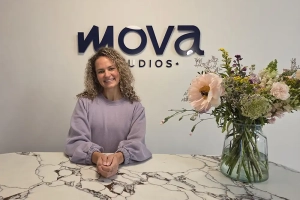

There’s a simple and free way to reduces stress and improve emotional regulation, writes confidence coach Jules Wyman
“New Year, New You” is a tiresome pressure and, frankly, old hat.
January does bring a particular kind of pause though — a quieter moment to reflect, review and take stock.
We can look at what has worked for us, what hasn’t, and what we’re no longer willing to take into a new year.
There is one simple practice that keeps proving its worth: journalling. Not the Adrian Mole kind (am I showing my age here?).
Writing in a way that, as research shows, reduces stress, improves emotional regulation and increases self-awareness.
Winter invites us to slow down, and putting pen to paper enables us to see what’s going on. It’s often the first time your thinking actually sees what it’s thinking.
Your thinking mind needs writing
It helps interrupt thoughts racing, worries looping, conversations replaying long after they’ve ended — which can be exhausting. Writing gives your thoughts somewhere to go instead of letting them swirl around unchallenged.
Seeing your thoughts on the page changes your relationship with them. You notice which ones are helpful, which ones are dramatic and which ones aren’t true. It’s often the first honest moment we give ourselves in a busy week.
Journalling is a private conversation with yourself. Not for chastising, blaming or shaming, simply to explore and get things out of your head.
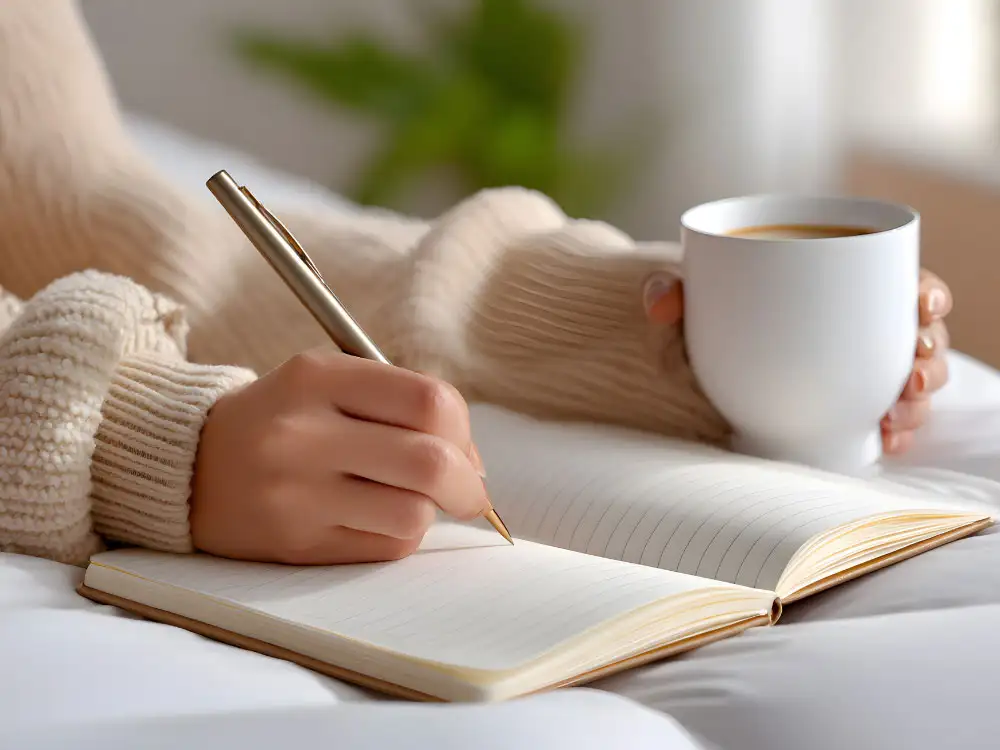
‘I don’t know what to write…’
This is the most common reason people avoid journalling. Many of us only ever wrote in environments that did judge, like school.
With journalling you’re not trying to produce anything impressive. It isn’t an exam. No one except you ever needs to read it. The purpose is awareness and noticing.
- Noticing what you may not have seen before.
- Noticing the stories on repeat, and checking their validity.
- Noticing the moments where you override your own needs.
When you stop trying to be polished, clarity appears on its own. You start to see patterns in your thinking and behaviour that were invisible when everything stayed in your head. Those patterns often invite a different way.
Writing reduces overwhelm
Most overwhelm comes from trying to hold too much. We push through, cope, keep going, until something snaps, or we do. Writing reduces the pressure.
Research shows journalling reduces anxiety and supports emotional regulation, but you don’t need a study to know it. You feel different the moment you empty your thoughts onto a page. You breathe differently, slow down and often a deep exhale happens.
I’ve witnessed this for over two decades with coaching clients: the deep exhale when they finally see what’s been holding them back, tripping them up or tiring them out. It’s not about solving everything. It’s about giving your nervous system a break so you can see your life with clearer eyes.
Feel Good More Often
In a heightened world with demands 24/7, people simply want to feel good more often – and want an accessible, sustainable way to achieve that. People want clarity and calm, not another wellbeing tool that becomes a chore.
I created the Feel Good More Often Journal based on writing-for-wellbeing research and twenty years of transformation coaching. This simple yet powerful book guides you week by week to feel good more often.
It’s a guided way to slow down and notice what’s actually going on inside you. It builds self-awareness without self-judgement.
It invites you to challenge perspectives — not from right/wrong, but from one question: “Does this help me feel good or not?”
One user wrote: “This is an essential upgrade for anyone who desperately needs time to think. Jules has crafted a unique journal that meets you where you are, then helps you walk yourself forward.
“If you’re tired of noise and looking for something evidence-led and practical, this journal gives you a way to slow down, think clearly and reconnect with what matters.”
Each weekly reflection is simple, honest and designed to meet you where you are — not where you think you “should” be. And the questions aren’t fluffy; they create real insight if you give them even five quiet minutes.
It’s a journal for people who want to grow without forcing themselves into someone else’s version of wellbeing.
- You don’t need to write every day.
- You don’t need to dedicate hours.
- You definitely don’t need perfect handwriting.
A weekly reflection is enough to shift how you move through your life.
Feeling good more often isn’t about constant positivity. It’s about knowing yourself well enough to make choices that support you — even on the difficult days. Journalling gives you that self-knowledge.
If you’re ready for a clearer, steadier, more grounded year, the Feel Good More Often Journal is a supportive place to begin.
- Jules Wyman is a confidence coach based in York. Find out more at her website