
York is a city built on layers.
Roman foundations sit beneath Viking streets, medieval guildhalls look out over Georgian townhouses, and centuries of history unfold within walking distance.
What often goes unmentioned in the heritage trails and guided tours is that gambling has been part of the city’s story for just as long as its walls and minster.
Did the Vikings gamble in York?
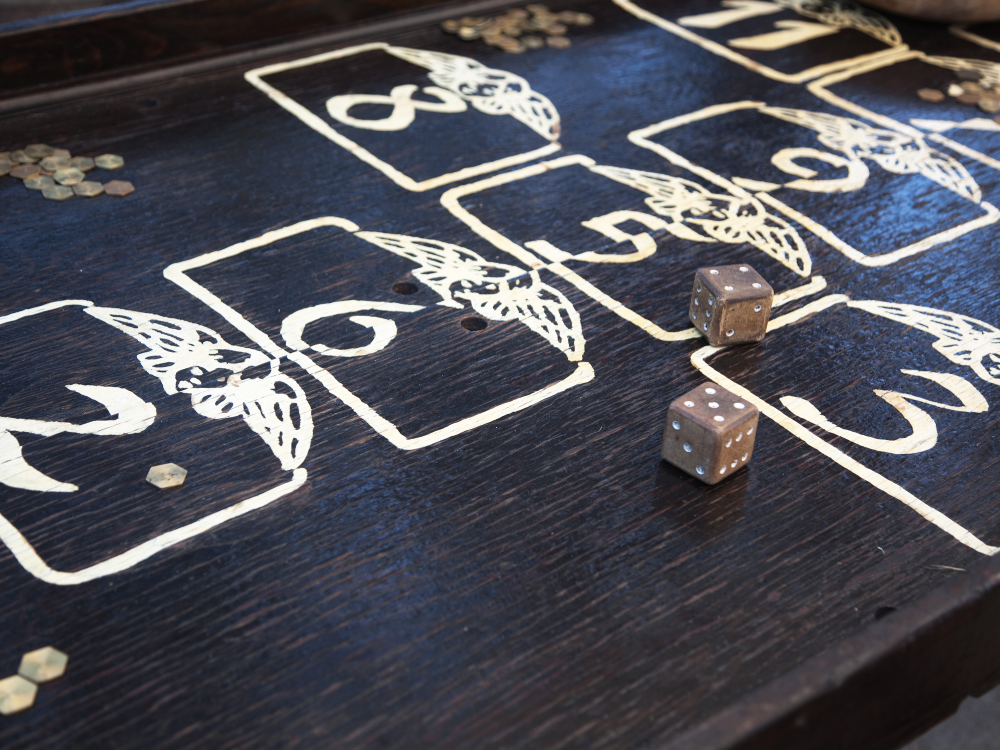
They almost certainly did. Archaeological evidence from across the Viking world confirms that dice games were a common pastime, and Jorvik, the Norse name for York during the period of Scandinavian settlement from the late 9th century, was one of the most significant Viking trading centres in Britain.
Bone dice and gaming pieces have been recovered from excavations in York and at comparable sites. The JORVIK Viking Centre on Coppergate sits above one of the most important Viking-age archaeological digs ever conducted in Europe, and the finds from that excavation paint a picture of a busy urban community where commerce, craft and recreation all played a role.
Norse sagas reference games of chance alongside board games like hnefatafl, and gambling on outcomes, from dice throws to physical contests, appears to have been woven into social life. In a city like Jorvik, where traders arrived from Scandinavia, Ireland and beyond, gaming would have been one of the few pastimes that crossed language barriers.
What happened to gambling in medieval York?
As York grew into one of England’s most important medieval cities, gambling continued, though not always with official approval. The city’s guilds and religious institutions periodically attempted to suppress dice games and other forms of wagering, viewing them as distractions from productive work and moral living.
Court records from medieval York include references to prosecutions related to gaming houses and unlicensed gambling. The fact that authorities felt the need to act repeatedly suggests the activity was persistent. Markets, fairs and feast days all provided opportunities for informal betting, and the city’s position as a regional trading hub meant there was always a flow of visitors looking for entertainment.
By the Tudor period, gambling had become more openly acknowledged as part of English social life. Card games gained popularity across all classes, and York’s inns and alehouses, many of them clustered around the streets that still exist today, would have been natural venues.
How did York Racecourse change the city’s relationship with betting?
The single biggest development in York’s gambling history is its racecourse. The Knavesmire has hosted horse racing since 1731, making it one of the oldest racecourses in continuous use in England.
Racing and betting have always been inseparable. The growth of York Racecourse through the 18th and 19th centuries coincided with the formalisation of bookmaking and the development of the rules and structures that still underpin British horse racing today. The Ebor Handicap, first run in 1843, remains one of the most prestigious flat races in the calendar and continues to draw significant betting interest.
For York as a city, the racecourse has been an economic engine. Racegoers spend in the city’s hotels, restaurants and shops, and major meetings like the Dante Festival and the Ebor Festival bring tens of thousands of visitors. The relationship between York and racing is so established that it rarely provokes the debates about gambling’s influence that arise in other sporting contexts.
When did betting become legal in England?
For much of English history, gambling existed in a grey area, widely practised but periodically suppressed. The Betting and Gaming Act of 1960 was the landmark moment, legalising betting shops for the first time and allowing off-course cash betting. Before that, placing a bet away from a racecourse was technically illegal, despite being commonplace.
York, like every other English city, saw betting shops open on its high streets in the years that followed. The 1960 Act did not create demand. It simply brought an existing activity into a regulated framework. For a city already steeped in racing culture, the change felt natural.
The Gambling Act 2005, which came into force in 2007, modernised the regulatory framework further. It established the UK Gambling Commission as the single regulator for commercial gambling in Britain and created the licensing structure that governs casinos, betting shops, bingo halls and online platforms today.
How has online gambling changed the picture?
The most dramatic shift in gambling over the past two decades has been the move online. The UK was one of the first countries to create a comprehensive regulatory framework for internet gambling, and the market has grown rapidly since.
For a city like York, this change is largely invisible. There is no physical infrastructure to see, no new buildings or shopfronts. But online platforms have fundamentally altered how people engage with gambling. The variety available is vast, ranging from sports betting to live casino tables to high payout slots designed to offer better return-to-player percentages than their mechanical predecessors.
The accessibility of online gambling has also brought responsible gambling into sharper focus. Modern platforms are required to offer deposit limits, self-exclusion tools and reality checks, regulatory requirements that did not exist when York’s first betting shops opened in the early 1960s.
What does gambling look like in York today?
York’s gambling landscape in 2026 is a mixture of old and new. The racecourse remains the centrepiece, a living link to more than 290 years of betting history on the Knavesmire. A handful of betting shops operate in the city centre, though their numbers have declined nationally as the market shifts online. The city does not have a licensed casino, which places it in a different category to nearby Leeds and other larger cities.
Online gambling, meanwhile, is as present in York as anywhere else in the UK. It is a private activity that does not announce itself in the way a betting shop or racecourse does, but it is now the dominant form of gambling by revenue.
What connects all of these threads, from Viking dice to digital platforms, is that gambling has never really left York. It has changed shape, moved venues, been regulated and re-regulated, but the underlying impulse to wager on an uncertain outcome is as old as the city itself.
The difference today is transparency. The Gambling Commission publishes data on participation, problem gambling rates and operator compliance. The industry is more visible, more scrutinised and more accountable than at any point in its long history. That is a significant change from the days when a game of dice in a Coppergate workshop was governed by nothing more than the trust between players.
York’s history with gambling is not a cautionary tale or a celebration. It is simply part of the city’s story, one more layer in a place that has always been shaped by the people who live, trade and seek entertainment within its walls.