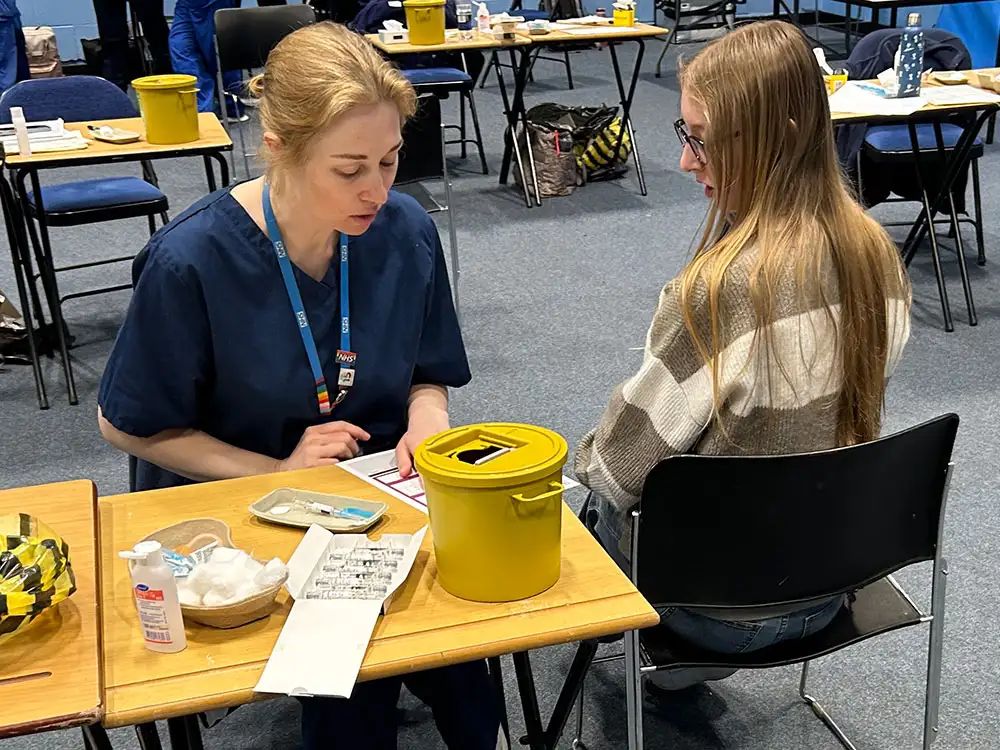

York’s public health lead has given an update amid an ongoing meningitis outbreak and shared advice on what people should do.
Peter Roderick, City of York Council’s public health director, said there had been no cases of meninococcal disease, the bacterial infection which causes meningitis and septicemia, recorded locally.
But he added people should look out for the symptoms of both infections and get vaccinated, particularly if they are of student age.
It comes as the peak of the meningitis outbreak which has killed two people in Kent is now thought to have passed, according to the UK Health Security Agency (UKHSA).
A total of 29 confirmed and suspected cases linked to the MenB strain outbreak in and around the University of Kent’s Canterbury campus were recorded as of Monday, March 23.
York official Mr Roderick said spotting the symptoms of meningitis and septicemia and getting the MenACWY vaccine were the two key things he wanted to impress on people.
He added in a Facebook message on Monday people could contact their GP and get the vaccine which is available up to the age of 25.
Many people have had vaccines as children or teenagers but immunity can vary.
The onset of meningitis, the inflammation of the lining of the brain, can be sudden.

Symptoms include a rash that does not fade when pressed with glass, a sudden high fever, severe and worsening headaches, a stiff neck and vomiting and diarrhoea.
Joint and muscle pain, a dislike of bright lights, very cold hands and feet, seizures, confusion and delirium and extreme tiredness and difficulty waking can also be signs of infection.
People who develop symptoms themselves or know someone who has should contact 999 or go to A&E urgently.
Mr Roderick also said people should ensure they and their children have had the MMR vaccine, following a rise in cases locally and nationally.
MMR vaccines are available for people of all ages.
The council said any child or young person not fully vaccinated may have to stay away from school, college or university for up to 21 days following exposure to measles.
Mr Roderick added people should be on the look out for the symptoms of measles.
It typically starts with cold-like symptoms including a high temperature, a runny or blocked nose, sneezing, coughing and red, sore and watering eyes.
Small white spots can appear on the inside of the mouth a few days later and the illness is also characterised by a red, blotchy rash.
Measles can spread very easily and it can lead to serious problems in some people and is particularly dangerous for children.
Anyone concerned about themselves or their child should contact their GP or the NHS 111 line in the first instance.