
More than 8,000 hectares of land will be left to nature as part of a new forest management approach to boost wildlife and biodiversity.
Forestry England, which manages more than 250,000 hectares of land across the country, said the restoration project will be rolled out in areas of four forests – including one in North Yorkshire.
The land managers will carry out a mix of activities to help nature recover in Newtondale north of Pickering, as well as Kielder Forest in Northumberland, Purbeck in Dorset and Neroche in Somerset.
Andrew Stringer, Forestry England’s head of environment, said: “We will intervene less in these four wild areas, giving nature the time and space to reshape the forest landscape.”
Other activities in the areas could include reintroducing lost wildlife including butterflies, rare plants, pine martens and beavers as well as wild cattle or moving fungi to restore soil.
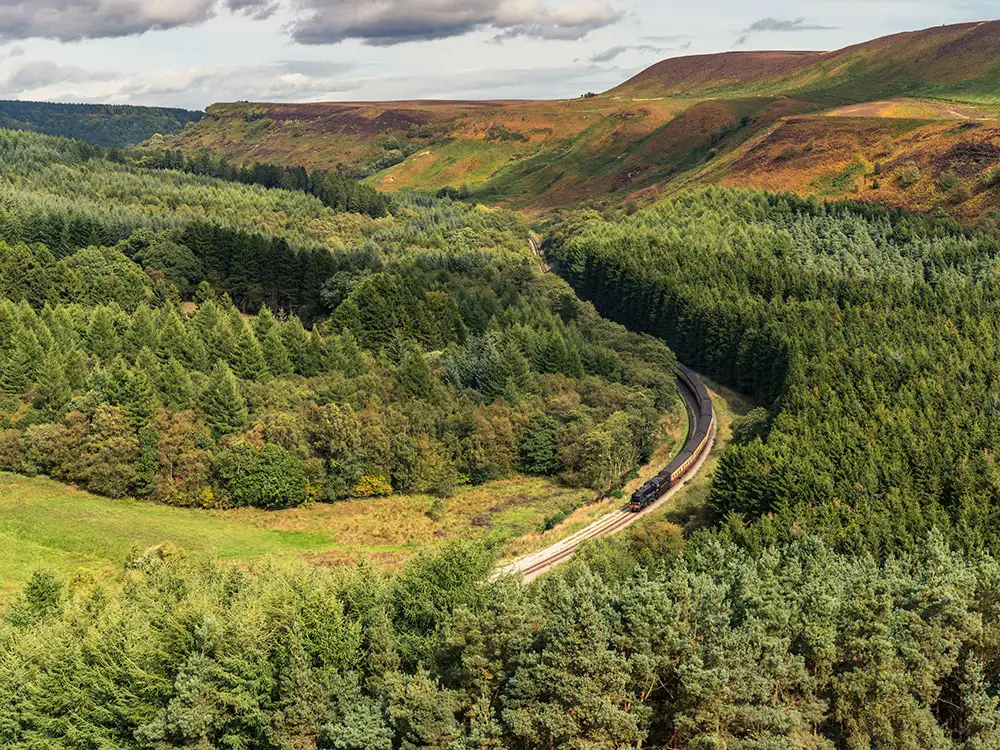
Forestry England says: “Newtondale is nestled within North Yorkshire’s renowned North York Moors National Park.
Newtondale Forest
“Spanning 458 hectares, this site includes diverse habitats such as conifer and broadleaved forests, rugged cliff faces, and picturesque fen landscapes.
“The landscape also includes agricultural fields, steep bracken-covered slopes, and pockets of pristine wilderness including mires, species-rich grasslands, and wet flushes.
“Our mission at Wild Newtondale is to nurture and safeguard this precious ecosystem for generations to come.
“Through thoughtful conservation efforts, we aim to enhance biodiversity by creating more dynamic woodlands, reintroducing essential herbivores, and fostering the growth of species that are vital to the local, regional, and national ecosystem.”
The areas will welcome visitors but will continue to be a source of sustainable timber through an innovative model of productive forestry, Forestry England added.
“There is an exciting unpredictability about this work in our four wild areas,” Mr Stringer said.
“We simply don’t know exactly how each of them will change over time or the detail of what they will look like.
“But this uncertainty is a positive part of being experimental and allowing natural processes to shape each landscape in the years ahead.
“We are confident that whatever happens these areas will become more nature-rich, with benefits for neighbouring landscapes.”