
The plans for the installation of more seats at a venue in York city centre, which will take the capacity to around 1,000 and could cut ticket prices, has been approved.
City of York Council have said yes to putting in 15 extra seats at the back of the third tier at the Grand Opera House in Cumberland Street.
Privacy screens are set to be reduced in height and brass finish rails are also set to be removed to improve views.
Council planning officers stated the extra capacity would appeal to the promoters of large-scale touring shows and the expansion could allow ticket prices to be reduced.
The Grand Opera House’s application stated the increased capacity would allow it to bring in extra income.
Existing steps are set to be used to access the new seats which will be created by raising the floor above space behind the current back row of the third tier.
Screens in front of the first row of the third tier are set to be lowered by 20cm to improve audience views.
False brass rails at the front of the second tier, which were installed during renovations in the 1980s, are also set to be removed.
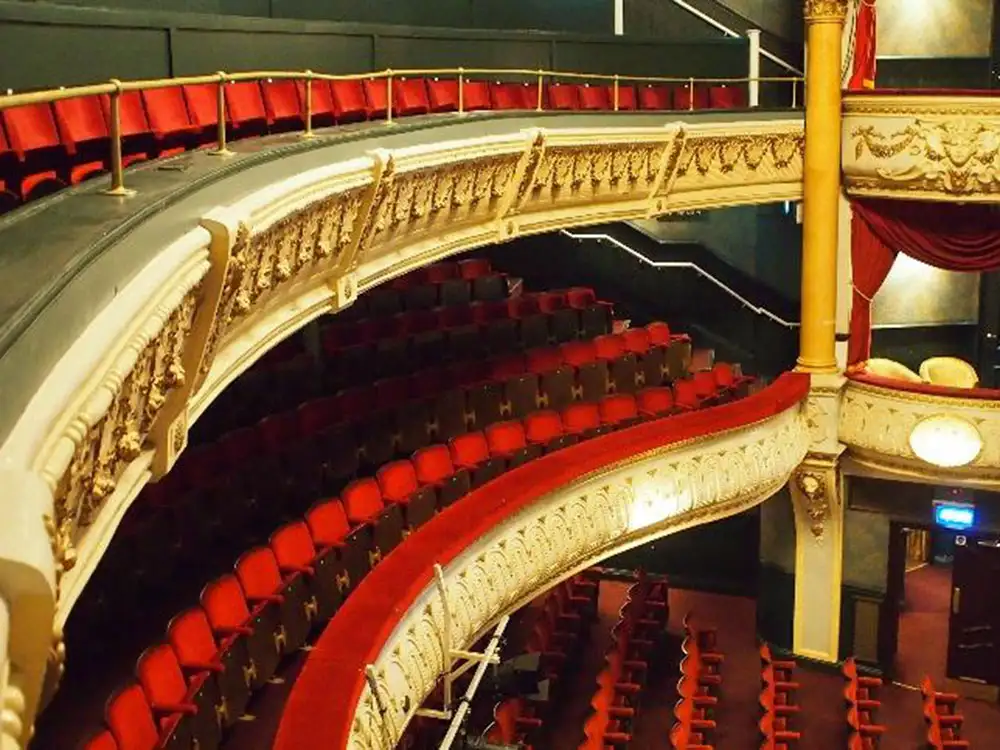
The new seats will match those already in the threatre.
A council report on the plans stated the alternations would have a negligible effect on the Grade II-listed building.
Planning officers said the alternations to the screens and the removal of rails would help improve customer experiences.
They said: “The rationale is to increase the capacity of seats to approximately 1,000 improve the function of the theatre sought by promoters of large-scale touring shows.
“This will also enable provisions for reduced seating prices.
“This is a public benefit to the continuing viability of the theatre would outweigh the acknowledged negligible harm to the listed building.”
The Theatres Trust, a public body which promotes venues in the UK, has also backed the Grand Opera House’s application.
The theatre’s plans stated the works would allow them to bring a currently vacant void area into beneficial use.
Plans stated: “The additional seating will utilise an element of the third tier which has been quite literally useless for a considerable amount of time.
“Reduction in the height of the screens by a mere 200mm will improve comfort and visibility markedly without detriment to the character and appearance.
“The proposal will ensure future investment and in turn will continue to constitute the optimum economic use for the site.”
The Grand Opera House was originally built as a corn exchange in the 19th Century.
JP Briggs converted it into a music hall in 1902 and it was renamed as the SS Empire in 1958.
Renovations were done in the late 1980s when it reopened as the Grand Opera House.