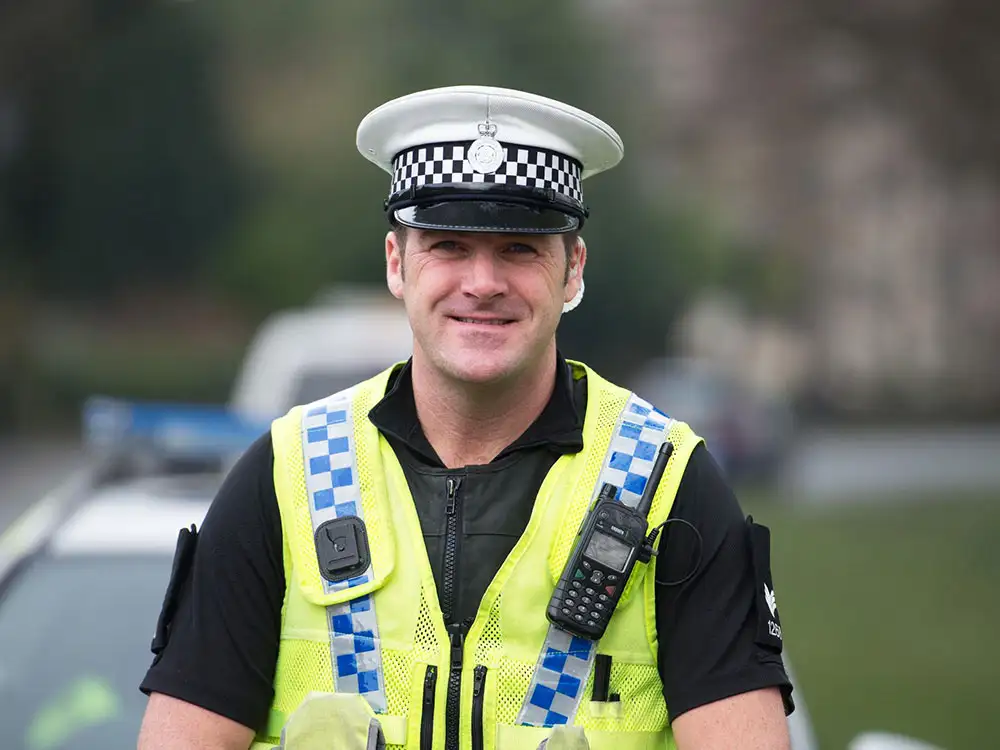

He’s the best known police officer on our patch, and has probably patrolled more miles around the county than anyone else. But soon, his career as a cop will be at an end.
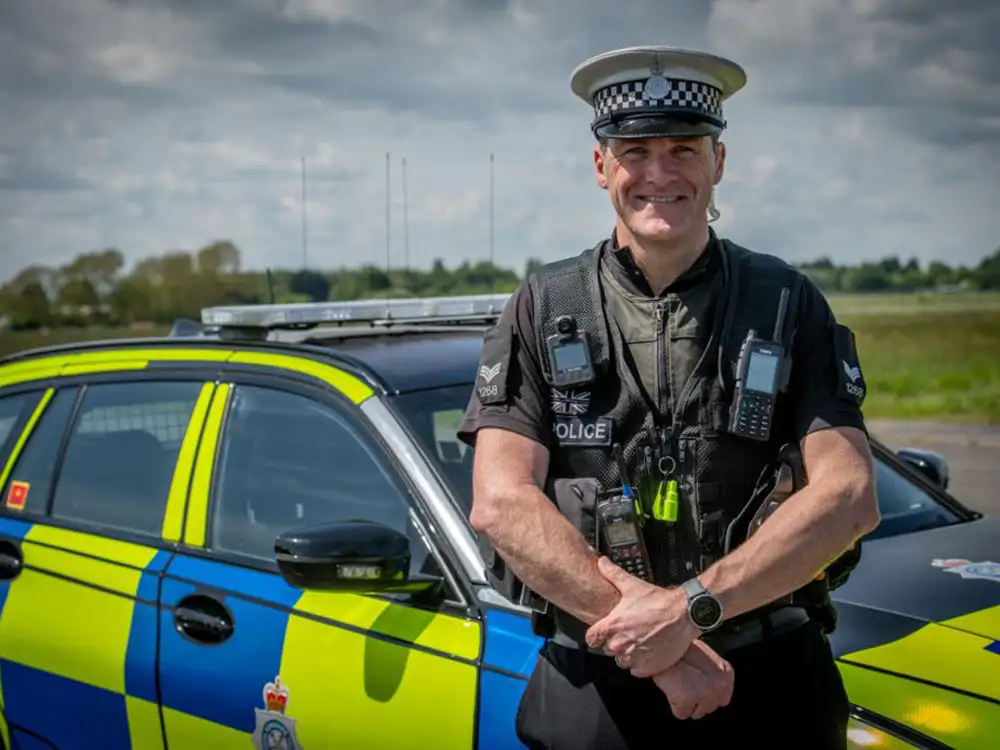
Sgt Paul Cording is retiring after 23 years in the force.
For most of that time he has been policing our roads. He has been first at the scene at some of the most high-profile incidents and collisions, a reassuring, experienced presence bringing order to scenes of chaos
He is well-known for his amazing charitable efforts – Paul’s raised tens of thousands for good causes down the years. He’s gained a national profile thanks to his appearances on Channel 5’s Traffic Cops. And he’s kept his 16K followers on Twitter abreast of life in the policing hot seat with unfailing insight and good humour.
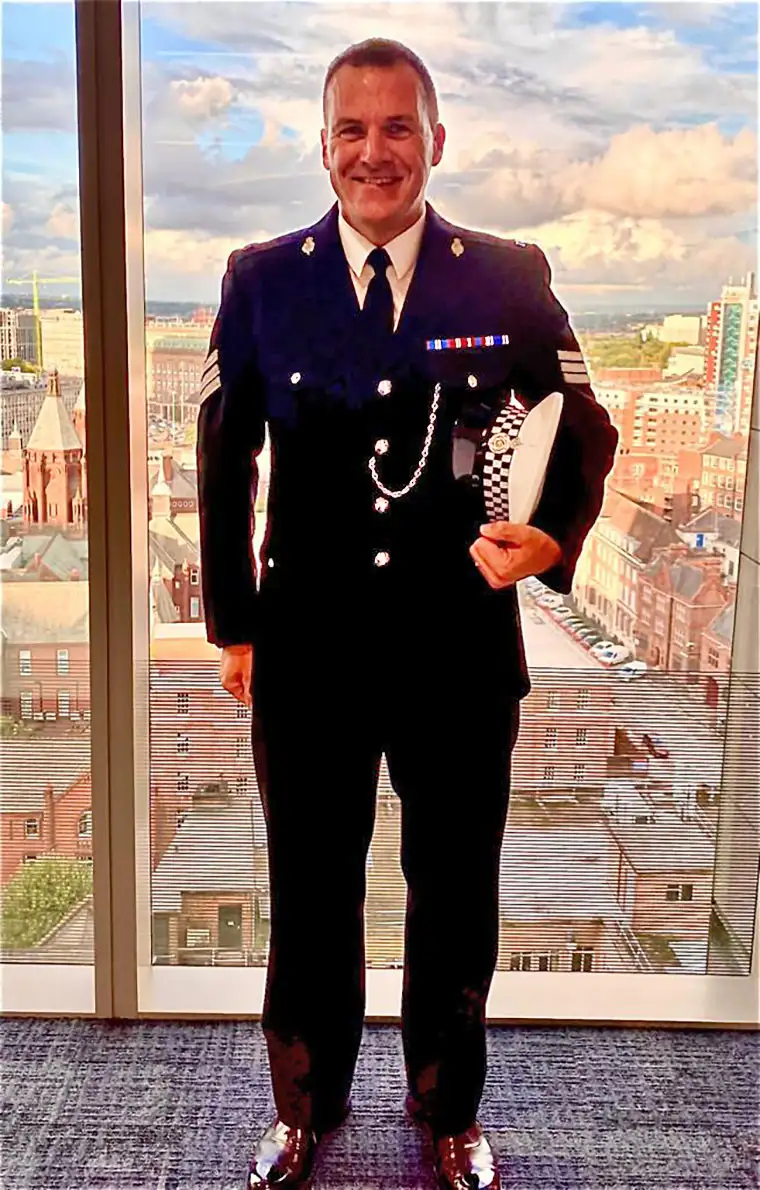
Last year, he was awarded a British Empire Medal in the King’s birthday honours for services to policing and charity.
Ahead of his retirement next week, Paul spoke to YorkMix about the highs and lows of his long career.
‘It can be very demanding’
Both his parents were in the RAF and he had a peripatetic childhood – he was born in Cheshire and at various times lived in Cyprus, Sardinia, Devon and Hampshire. After he left school Paul followed his parents’ route, spending ten years in the air force.
On leaving the service, he joined North Yorkshire Police as a response officer in Harrogate, moving on to the neighbourhood teams there and in Skipton.
And it was while working in the Craven area that he developed a passion for roads policing, taking up that role permanently in 2010.
After you left the RAF, why did you join the police?
Unlike a lot of people, it’s not something that I wanted to do from a very young age. But having been in the RAF and seen the camaraderie of a uniform service – and I’ve still got lifelong friends from my air force days – the police is very similar.
You’ve seen the best and worst of society in roads policing. What are the examples of both that stick in your mind?
The very worst are some of the collisions we’ve been to. Things like the triple fatal on the A64 where three members of the same family were very sadly killed back in 2021.
I was also one of the first on scene in Harrogate when one of my former colleagues was on her way to work and was killed by a speeding drunk and drug driver.
We do see the very worst things – but also the very best in humanity. Certainly after the triple fatal on the A64 the public really rallied round. Because, as if that wasn’t bad enough, when the remaining family members got back to their house, they’d been burgled.
I couldn’t sit back and do nothing. I set up a charity page, and within two weeks, raised about £21,000 pounds for the family to replace some of the material things. There was a lot of stuff that was very personal and that couldn’t be replaced, but the things that could be replaced were. So that’s when you see the best in people.
When you do see the people that use our roads as a racetrack with complete disregard for other people, that’s when you see the worst in society as well.
The job can take its toll. How do you cope?
We do see some awful things, and both physically and mentally, it can be very demanding. Everybody reacts to trauma and different situations differently, and there’s no right or wrong answer about how to deal with it.
For me, I get my drive from doing my best for people at their time of need. We live in some great countryside – I look after myself by getting out in the Dales. I go for a walk, go for a run, put my headphones on, or just listen to to the countryside.
Latest charity feat
Paul has always been an active fundraiser for various causes close to his heart. Last week he completed #1268The24HourChallenge – 1268 is his collar number, and he’s been in the police 24 years.
He walked or ran 5.28km every hour for 24 hours, totalling 126.8km, to raise £3,000 for Police Treatment Centres. He smashed that target, raising more than £6,000 so far – and you can still donate here.
“I’ve seen colleagues who, both physically and mentally, have been injured, and I’ve also seen the great work that the Police Treatment Centres are doing, patching them back up and and getting them back to full fitness,” he said. “So that’s my drive to raise money in this challenge that I’m doing.”
What is it about roads policing that is so satisfying?
You have the variety. You deal with road safety, casualty reduction on one hand, and on the other hand, you are looking at ANPR (Automatic Number Plate Recognition), you’re denying criminals use of the road. You’re targeting drink and drug drivers, those that put other people who use the roads legally at risk.
With your colleagues you’ve featured on Traffic Cops on TV. What’s that been like?
The first time it happens, it’s very weird, very strange, because you’ve got a camera over your shoulder. But I think with the advent of things like body-worn cameras, everything we do now is recorded. Every time you go to any contentious situation, there’s a member of public with the mobile phone in your face.
So whilst it was very strange to start with, I don’t think it is as it is as strange now, and it’s almost normal that everything you do is recorded. But what I do think it has done, it humanises us. It shows the public what we do and some of the situations we have to deal with.
Do you think the courts support you?
I think the courts are in a very difficult situation like we are. They struggle with staffing. The prisons are full. There’s a whole bigger picture. In every part of life, there are things that could be done better, and things that would help both the court system and ourselves.
What are the biggest changes you’ve seen in your time with North Yorkshire Police?
The different in crime – there’s a lot more online crime now. When I first started, you could make a phone call and you could text somebody. But now mobile phones are people’s lives. We see it, unfortunately, far too often in collisions, but also as part of everyday life, people are being scammed – vulnerable people have been targeted by online scams, cyber crime. So we had to adapt to that.
There’s an election on, there’s a new North Yorkshire police commissioner. What’s your message to our rulers on their approach to the police?
We’ve lost a lot of police officers over the over the years. Retention is a real key, if I’m being honest.
When I joined, people saw it as a 30 year career. I do think now that some people are joining for a short-term career then considering doing something else.
What I would say is, it is a fantastic job. Yes, I’ve had some real lows, but I’ve had some fantastic highs. I’ve met some amazing people, both colleagues and members of the public. And I would advocate joining because it’s done me very well.
How are you feeling as you approach retirement from the police?
The term I’ve been using is ‘apprehensively excited’. After 32-odd years of public service, uniform service, plus living on a military base before that, it’ll be a very strange feeling. I’m going to take the summer off, spend some time with the family, have a couple of holidays, and then at the end of the summer, we’ll see what’s around, and try and find a proper job!
What will you miss most – and least?
What will I miss most? That would have to be the people that I work with. We’re a unique breed, if you like, because we all see things that not many other people see, and sometimes it’s good to sound off to those colleagues. You don’t necessarily want to take your baggage home and share that with your family. So I will miss the people that I work with.
I won’t miss getting up at five o’clock every morning for an early shift, or the graveyard shift, as we call it, usually between about three and five. But on the whole I will, I will miss it, because it’s been good to me, and I’ve had a fantastic career.